

Summary & Insights





Can a piece of meat actually “glisten” at you to let you know it’s perfectly cooked? For Executive Chef Hilary Sterling, the answer is a resounding yes. In a world where modern cooking has become heavily regimented by thermometers and precise timers, Sterling champions a return to the senses. From listening to the specific sound of pasta tossing in a pan to feeling the “rusticity” of a dish, her approach to culinary arts is less about scientific precision and more about an intuitive, almost spiritual connection with the ingredients.
Sterling’s journey to the helm of the successful New York restaurant Chisiamo was not a linear path of prestige. She describes a childhood of “mushy” food—cream cheese sandwiches and canned potatoes—which fueled her obsession with texture and quality. Her career was forged in the high-pressure environments of NYC’s elite kitchens, where she learned the hard way that politeness can actually lead to burns and that failure is often the best teacher. This was epitomized by a grueling period where she overcooked 125 pork tenderloins in one night, only to be told by her chef to “be one with the pork” and try again.
Beyond the stove, Sterling reveals the complex machinery of running a high-volume restaurant. She discusses the “mental game” of leadership, moving away from the dictator-style management of the past toward a model of mentorship and fairness. She also pulls back the curtain on the aggressive economics of the industry, describing the high-stakes negotiations for bulk ingredients—like 28,000 pounds of cipollini onions—and the courage it took to turn down a prestigious offer from legendary restaurateur Danny Meyer to ensure she could maintain her own creative voice.
Surprising Insights
- Dry vs. Fresh Pasta: Contrary to popular belief, Sterling argues that dry pasta often tastes better than fresh in certain dishes (like cacio e pepe) because the al dente texture interacts more effectively with the cheese and butter emulsion.
- The “Anti-Culinary” Background: While many chefs grow up with a passion for gastronomy, Sterling’s drive was sparked by a childhood of poor, textureless food, suggesting that a lack of early culinary inspiration can be a powerful motivator.
- The Danger of Prestige: Sterling turned down a high-profile role at the Union Square Cafe because she felt the restaurant’s immense history would stifle her own voice, proving that creative autonomy can be more valuable than professional prestige.
- Senses over Science: She views the modern reliance on thermometers and rigid recipes as a barrier to truly understanding food, advocating for “sensory” cooking—listening, smelling, and watching for visual cues like “glistening” meat.
Practical Takeaways
- Learn by Doing (and Failing): Embrace “the crush.” Sterling’s growth came not from success, but from the embarrassment of massive failures, which forced her to obsessively study the process until she mastered it.
- Lead through “Show and Do”: When managing others, replace “because I told you so” with “let me show you why.” Combine a demonstration with immediate joint execution to build confidence and skill.
- Optimize Physical Workflow: Arrange your workspace (the “round robin formation”) to minimize the number of times you have to put down a tool, ensuring your movements are fluid and efficient.
- Trust Your Instincts Over Metrics: While data and tools are helpful, develop your intuitive senses. Practice paying attention to the sounds and smells of your work to catch errors that a gauge might miss.
Liệu một miếng thịt có thực sự biết “lấp lánh” để báo cho bạn biết rằng nó đã chín hoàn hảo? Với Bếp trưởng điều hành Hilary Sterling, câu trả lời là hoàn toàn có. Trong một thế giới mà kỹ thuật nấu nướng hiện đại bị chi phối nặng nề bởi nhiệt kế và những bộ hẹn giờ chính xác, Sterling ủng hộ việc quay trở lại với các giác quan. Từ việc lắng nghe âm thanh đặc trưng khi đảo mì trong chảo cho đến việc cảm nhận “vẻ mộc mạc” của một món ăn, cách tiếp cận của cô đối với nghệ thuật ẩm thực ít chú trọng vào độ chính xác khoa học mà thiên về một sự kết nối trực giác, gần như là tâm linh với các nguyên liệu.
Hành trình tiến đến vị trí dẫn dắt nhà hàng Chisiamo thành công tại New York của Sterling không phải là một con đường bằng phẳng đầy danh tiếng. Cô mô tả tuổi thơ của mình gắn liền với những món ăn “nhão nhoét” — như bánh mì kẹp phô mai kem và khoai tây đóng hộp — điều đã thôi thúc nỗi ám ảnh của cô về kết cấu và chất lượng thực phẩm. Sự nghiệp của cô được tôi luyện trong môi trường áp lực cao tại những căn bếp thượng lưu ở NYC, nơi cô học được bài học xương máu rằng sự lịch sự đôi khi có thể dẫn đến những vết bỏng, và thất bại thường là người thầy tốt nhất. Điều này được thể hiện rõ nhất qua một giai đoạn cực hình khi cô nấu chín quá 125 miếng thăn lợn trong một đêm, để rồi chỉ được bếp trưởng nói một câu: “Hãy hòa làm một với miếng thịt” và thử lại lần nữa.
Bên ngoài bếp lửa, Sterling hé lộ guồng máy phức tạp khi vận hành một nhà hàng với công suất lớn. Cô thảo luận về “cuộc chiến tâm lý” trong lãnh đạo, chuyển dịch từ phong cách quản lý kiểu độc tài trong quá khứ sang mô hình cố vấn và công bằng. Cô cũng vén màn bức tranh kinh tế khốc liệt của ngành công nghiệp này, mô tả những cuộc thương lượng đầy căng thẳng cho các nguyên liệu số lượng lớn — chẳng hạn như 28.000 pound hành cipollini — và lòng can đảm khi từ chối một lời đề nghị danh giá từ nhà hàng trứ danh Danny Meyer để đảm bảo cô có thể duy trì bản sắc sáng tạo của riêng mình.
Những góc nhìn bất ngờ
- Mì khô và mì tươi: Trái với quan niệm phổ biến, Sterling lập luận rằng mì khô thường ngon hơn mì tươi trong một số món nhất định (như cacio e pepe) vì kết cấu al dente (săn chắc) tương tác hiệu quả hơn với hỗn hợp nhũ tương của phô mai và bơ.
- Nền tảng “phi ẩm thực”: Trong khi nhiều đầu bếp lớn lên với niềm đam mê ẩm thực, động lực của Sterling lại bắt nguồn từ một tuổi thơ với những món ăn nghèo nàn, thiếu kết cấu, cho thấy việc thiếu hụt cảm hứng ẩm thực sớm có thể trở thành một động lực mạnh mẽ.
- Mối nguy của danh tiếng: Sterling đã từ chối một vị trí cao cấp tại Union Square Cafe vì cô cảm thấy lịch sử đồ sộ của nhà hàng này sẽ làm lu mờ tiếng nói của chính mình, chứng minh rằng quyền tự chủ trong sáng tạo có thể giá trị hơn danh tiếng nghề nghiệp.
- Giác quan trên hết, khoa học theo sau: Cô coi việc quá phụ thuộc vào nhiệt kế và các công thức cứng nhắc hiện nay là rào cản trong việc thực sự thấu hiểu thực phẩm, đồng thời ủng hộ cách nấu ăn bằng “cảm quan” — lắng nghe, ngửi và quan sát các dấu hiệu hình ảnh như sự “lấp lánh” của miếng thịt.
Bài học thực tiễn
- Học từ trải nghiệm (và thất bại): Hãy chấp nhận “áp lực khủng khiếp”. Sự trưởng thành của Sterling không đến từ thành công, mà từ sự xấu hổ của những thất bại nặng nề, điều buộc cô phải nghiên cứu quy trình một cách ám ảnh cho đến khi làm chủ được nó.
- Lãnh đạo bằng cách “làm mẫu”: Khi quản lý người khác, hãy thay thế câu “vì tôi bảo thế” bằng “để tôi chỉ cho bạn tại sao”. Kết hợp việc hướng dẫn với thực hiện chung ngay lập tức để xây dựng sự tự tin và kỹ năng cho nhân viên.
- Tối ưu hóa quy trình vận động: Sắp xếp không gian làm việc (theo “đội hình xoay vòng”) để giảm thiểu số lần phải đặt dụng cụ xuống, đảm bảo mọi cử động đều mượt mà và hiệu quả.
- Tin vào trực giác hơn là chỉ số: Dù dữ liệu và công cụ là hữu ích, hãy phát triển các giác quan trực quan của bạn. Tập trung chú ý đến âm thanh và mùi hương trong lúc làm việc để phát hiện những sai sót mà các thiết bị đo lường có thể bỏ sót.
一塊肉是否真的能透過「閃爍光澤」來告訴你它已經熟得恰到好處?對於行政主廚希拉里·斯特林(Hilary Sterling)來說,答案是肯定的。在現代烹飪被溫度計和精確計時器高度規律化的世界裡,斯特林倡導回歸感官。從傾聽義大利麵在鍋中翻炒的特定聲音,到感受一道菜的「粗獷感」,她對烹飪藝術的追求不再於科學的精確,而是在於一種與食材之間直覺甚至近乎精神層面的連結。
斯特林執掌紐約知名餐廳 Chisiamo 的過程並非一帆風順的晉升之路。她描述自己的童年充滿了「軟爛」的食物——如奶油乳酪三明治和罐裝馬鈴薯——這激發了她對口感與品質的痴迷。她的職業生涯是在紐約頂級廚房的高壓環境中鍛造而成的,在那裡她以慘痛的經驗體會到,過分客氣反而可能導致燙傷,而失敗往往是最好的老師。最典型的例子是她曾經歷過一段艱苦的時期,在一個晚上裡竟然將 125 塊豬里脊肉全部煮過頭,而當時主廚對她說的竟是「與豬肉合而為一」,然後讓她重新嘗試。
在爐灶之外,斯特林揭露了經營高客流量餐廳的複雜機制。她討論了領導力中的「心理博弈」,將管理模式從過去的獨裁風格轉向導師制與公平原則。她還揭開了該產業激烈的經濟面紗,描述了採購大宗食材(例如 28,000 磅的小洋蔥)時的高風險談判,以及她為了維持自己的創作主導權,而鼓起勇氣拒絕傳奇餐飲家丹尼·梅耶(Danny Meyer)提供的名貴職位的過程。
驚人之見
- 乾麵 vs. 鮮麵:與大眾認知相反,斯特林認為在某些料理(如 Cacio e Pepe)中,乾麵的口感往往比鮮麵更好,因為其 al dente(有嚼勁)的質地能與起司和奶油乳化液更有效地結合。
- 「反烹飪」背景:許多主廚自小對美食充滿熱情,而斯特林的動力卻源自童年時期缺乏質感且糟糕的飲食經驗,這表明早期缺乏烹飪啟發反而可能成為強大的動力。
- 名聲的陷阱:斯特林拒絕了在 Union Square Cafe 的高階職位,因為她覺得該餐廳深厚的歷史會掩蓋她自己的聲音,這證明了創作自主權有時比專業名聲更有價值。
- 感官勝於科學:她認為現代對溫度計和僵化食譜的依賴是真正理解食物的障礙,因此倡導「感官烹飪」——透過傾聽、嗅聞以及觀察如肉類「閃爍光澤」等視覺線索來烹飪。
實用啟示
- 在實踐(與失敗)中學習:擁抱「高壓狀態」。斯特林的成長並非來自成功,而是來自大規模失敗後的尷尬,這迫使她強迫性地研究過程,直到完全掌握為止。
- 採取「演示並實行」的領導方式:在管理他人時,將「因為我這樣要求」改為「讓我向你展示原因」。將演示與立即的共同執行相結合,以建立信心與技巧。
- 優化物理工作流:安排你的工作空間(採「輪轉陣型」),盡量減少放下工具的次數,確保動作流暢且高效。
- 信任直覺而非數據:雖然數據和工具很有幫助,但應培養直覺感官。練習留意工作中的聲音和氣味,以捕捉儀表可能忽略的錯誤。
Un morceau de viande peut-il réellement « luire » pour vous signaler qu’il est parfaitement cuit ? Pour la chef exécutive Hilary Sterling, la réponse est un « oui » retentissant. Dans un monde où la cuisine moderne est devenue très réglementée par les thermomètres et les minuteries de précision, Sterling prône un retour aux sens. Qu’il s’agisse d’écouter le bruit spécifique des pâtes sautées dans une poêle ou de ressentir la « rusticité » d’un plat, son approche des arts culinaires relève moins de la précision scientifique que d’une connexion intuitive, presque spirituelle, avec les ingrédients.
Le parcours de Sterling pour arriver à la tête du célèbre restaurant new-yorkais *Chisiamo* n’a pas été un chemin linéaire vers le prestige. Elle décrit une enfance faite de nourritures « molles » — sandwichs au fromage à la crème et pommes de terre en conserve — ce qui a alimenté son obsession pour la texture et la qualité. Sa carrière s’est forgée dans les environnements sous haute tension des cuisines d’élite de New York, où elle a appris à la dure que la politesse peut mener aux brûlures et que l’échec est souvent le meilleur professeur. Cela a été illustré par une période éprouvante où elle a surcuit 125 filets de porc en une seule soirée, pour s’entendre dire par son chef de « faire corps avec le porc » et de recommencer.
Au-delà des fourneaux, Sterling révèle les rouages complexes de la gestion d’un restaurant à fort volume. Elle aborde le « jeu mental » du leadership, s’éloignant du style de management dictatorial du passé pour s’orienter vers un modèle de mentorat et d’équité. Elle lève également le voile sur l’économie agressive du secteur, décrivant les négociations à enjeux élevés pour les ingrédients en gros — comme 28 000 livres d’oignons cipollini — et le courage qu’il lui a fallu pour refuser une offre prestigieuse du légendaire restaurateur Danny Meyer afin de préserver sa propre voix créative.
Aperçus Surprenants
- Pâtes sèches vs pâtes fraîches : Contrairement aux idées reçues, Sterling soutient que les pâtes sèches ont souvent meilleur goût que les fraîches dans certains plats (comme le *cacio e pepe*), car la texture *al dente* interagit plus efficacement avec l’émulsion de fromage et de beurre.
- Un parcours « anti-culinaire » : Alors que de nombreux chefs grandissent avec une passion pour la gastronomie, la motivation de Sterling est née d’une enfance marquée par une nourriture médiocre et sans texture, suggérant qu’un manque d’inspiration culinaire précoce peut être un puissant moteur.
- Le danger du prestige : Sterling a refusé un poste de haut profil à l’Union Square Cafe car elle craignait que l’immense histoire du restaurant n’étouffe sa propre expression, prouvant que l’autonomie créative peut être plus précieuse que le prestige professionnel.
- Les sens avant la science : Elle considère que la dépendance moderne aux thermomètres et aux recettes rigides constitue un obstacle à la compréhension réelle des aliments, et prône une cuisine « sensorielle » — écouter, sentir et guetter des indices visuels comme la « luisance » de la viande.
Conseils Pratiques
- Apprendre par la pratique (et l’échec) : Acceptez « le rush ». La progression de Sterling n’est pas venue du succès, mais de l’embarras causé par des échecs massifs, qui l’ont obligée à étudier le processus de manière obsessionnelle jusqu’à le maîtriser.
- Diriger par l’exemple (« montrer et faire ») : En gérant d’autres personnes, remplacez le « parce que je l’ai dit » par « laissez-moi vous montrer pourquoi ». Combinez une démonstration avec une exécution commune immédiate pour renforcer la confiance et la compétence.
- Optimiser le flux de travail physique : Organisez votre espace de travail (la « formation en cercle ») pour minimiser le nombre de fois où vous devez poser un ustensile, garantissant ainsi des mouvements fluides et efficaces.
- Faire confiance à son instinct plutôt qu’aux mesures : Bien que les données et les outils soient utiles, développez vos sens intuitifs. Entraînez-vous à prêter attention aux sons et aux odeurs de votre travail pour repérer des erreurs qu’un appareil pourrait ne pas détecter.
Kann ein Stück Fleisch tatsächlich zu einem „glänzen“, um Ihnen mitzuteilen, dass es perfekt gegart ist? Für Chefköchin Hilary Sterling lautet die Antwort ein eindeutiges Ja. In einer Welt, in der das moderne Kochen stark von Thermometern und präzisen Timern reglementiert wird, setzt sich Sterling für eine Rückkehr zu den Sinnen ein. Vom Zuhören bei dem spezifischen Geräusch, wenn Pasta in der Pfanne geschwenkt wird, bis hin zum Erfühlen der „Rustikalität“ eines Gerichts – ihr Ansatz für die kulinarischen Künste basiert weniger auf wissenschaftlicher Präzision als vielmehr auf einer intuitiven, fast spirituellen Verbindung zu den Zutaten.
Sterlings Weg an die Spitze des erfolgreichen New Yorker Restaurants „Chisiamo“ war kein linearer Pfad voller Prestige. Sie beschreibt eine Kindheit mit „matschigem“ Essen – Frischkäse-Sandwiches und Kartoffeln aus der Dose –, was ihre Besessenheit von Textur und Qualität befeuerte. Ihre Karriere wurde in der Hochdruckumgebung der Elite-Küchen von NYC geschmiedet, wo sie auf die harte Tour lernte, dass Höflichkeit tatsächlich zu Verbrennungen führen kann und dass Scheitern oft der beste Lehrer ist. Dies gipfelte in einer quälenden Phase, in der sie in einer einzigen Nacht 125 Schweinefilets übergart hatte, nur um von ihrem Küchenchef den Rat zu erhalten, sie solle „eins werden mit dem Schweinefleisch“ und es erneut versuchen.
Abseits des Herdes enthüllt Sterling das komplexe Getriebe eines hochfrequentierten Restaurants. Sie spricht über das „mentale Spiel“ der Führung und den Weg weg vom Diktator-Stil des Managements der Vergangenheit hin zu einem Modell des Mentorships und der Fairness. Zudem gewährt sie einen Einblick in die aggressive Ökonomie der Branche: Sie beschreibt die riskanten Verhandlungen über Großmengen an Zutaten – wie etwa 28.000 Pfund Cipollini-Zwiebeln – und den Mut, den es erforderte, ein prestigeträchtiges Angebot des legendären Gastronomen Danny Meyer abzulehnen, um ihre eigene kreative Stimme bewahren zu können.
Überraschende Erkenntnisse
- Getrocknete vs. frische Pasta: Entgegen der allgemeinen Meinung argumentiert Sterling, dass getrocknete Pasta in bestimmten Gerichten (wie Cacio e Pepe) oft besser schmeckt als frische, da die Al-dente-Textur effektiver mit der Käse-Butter-Emulsion interagiert.
- Der „anti-kulinarische“ Hintergrund: Während viele Köche mit einer Leidenschaft für die Gastronomie aufwachsen, wurde Sterlings Antrieb durch eine Kindheit mit schlechtem, texturell armem Essen geweckt. Dies legt nahe, dass ein Mangel an früher kulinarischer Inspiration ein kraftvoller Motivator sein kann.
- Die Gefahr des Prestiges: Sterling lehnte eine hochkarätige Position im Union Square Cafe ab, weil sie das Gefühl hatte, dass die immense Historie des Restaurants ihre eigene Stimme ersticken würde. Dies beweist, dass kreative Autonomie wertvoller sein kann als professionelles Prestige.
- Sinne über Wissenschaft: Sie betrachtet das moderne Vertrauen auf Thermometer und starre Rezepte als Barriere für ein echtes Verständnis von Lebensmitteln und plädiert für ein „sensorisches“ Kochen – durch Zuhören, Riechen und das Achten auf visuelle Hinweise wie das „Glänzen“ von Fleisch.
Praktische Tipps
- Lernen durch Tun (und Scheitern): Stellen Sie sich dem „Stress“ (the crush). Sterlings Wachstum resultierte nicht aus Erfolgen, sondern aus der Peinlichkeit massiver Fehler, die sie dazu zwangen, den Prozess obsessiv zu studieren, bis sie ihn beherrschte.
- Führen durch „Vormachen und Mitmachen“: Ersetzen Sie bei der Führung anderer das „Weil ich es so gesagt habe“ durch „Lass mich dir zeigen, warum“. Kombinieren Sie eine Demonstration mit einer sofortigen gemeinsamen Ausführung, um Vertrauen und Geschick aufzubauen.
- Physischen Workflow optimieren: Richten Sie Ihren Arbeitsplatz so ein (die sogenannte „Round Robin“-Formation), dass die Anzahl der Male, zu denen Sie ein Werkzeug ablegen müssen, minimiert wird. So werden Ihre Bewegungen flüssig und effizient.
- Instinkten mehr vertrauen als Metriken: Daten und Werkzeuge sind hilfreich, aber entwickeln Sie Ihre intuitiven Sinne. Üben Sie, auf die Geräusche und Gerüche Ihrer Arbeit zu achten, um Fehler zu erkennen, die ein Messgerät übersehen könnte.
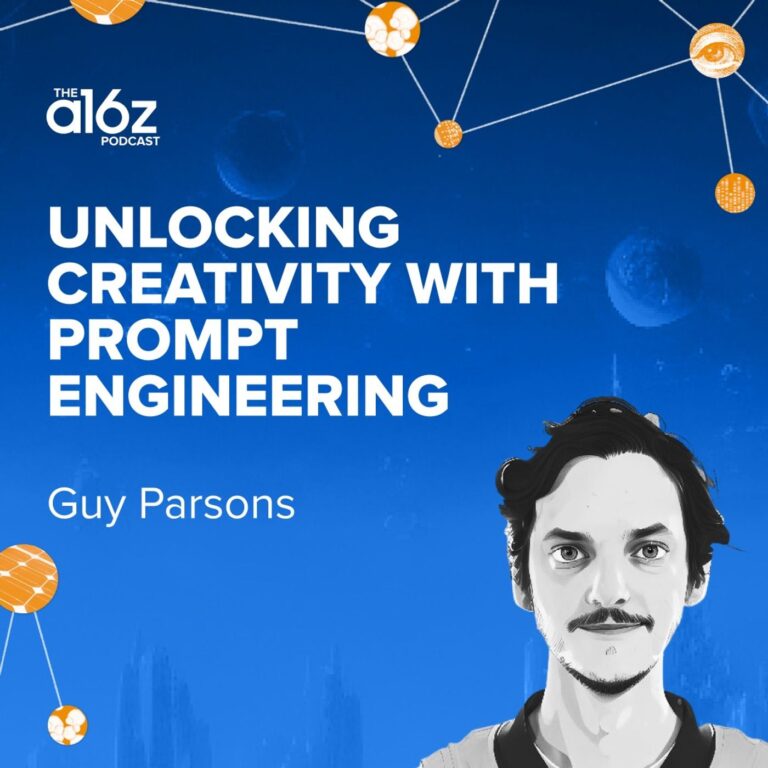
With every new technology, some jobs are lost while others are gained. People often focus on the former, but in this episode we chose to highlight the latter – a highly creative role that emerges alongside AI: the prompt engineer.
Until AI can close the loop of its own, each tool still requires a set of prompts. Just like a composer feeds an instrument the notes to play, a prompt engineer feeds an AI a map of what to produce. And if we know anything from music it’s that composing great music takes great skill!
In this episode we explore the emerging importance of prompting with Guy Parsons, the early learnings of how to do it effectively, and where this field might be going.
Will the prompt engineer be more like the highly sought after DevOps engineer, or a proficiency like Excel that you find on every resume? Listen in to hear Guy’s take.
Interested in the prompt competition? Email us at podpitches@a16z.com.
Resources:
DALL-E 2 Prompt Book: https://dallery.gallery/the-dalle-2-prompt-book/
Find Guy on Twitter: https://twitter.com/GuyP
Guy’s combining image experiment: https://twitter.com/GuyP/status/1612880405207580672
Guy’s amorphous prompt experiment: https://twitter.com/GuyP/status/1608475973300948993
Guy’s space duck: https://twitter.com/GuyP/status/1601342688225525761
Prompt base: https://promptbase.com/
Lexica: https://lexica.art/
Topics Covered:
0:00 – Introduction
01:49 – DALL-E 2 Prompt Book
05:29 – Parallel skills
06:51 – 80/20 prompting
10:16 – New ways of prompting
13:44 – Pulling the AI slot machine
18:09 – Comparing models
21:04 – Requested features
26:34 – Learning with AI
27:58 – Practical use cases
32:08 – A top 1% prompt engineer
36:17 – The most popular images
Stay Updated:
Find us on Twitter: https://twitter.com/a16z
Find us on LinkedIn: https://www.linkedin.com/company/a16z
Subscribe on your favorite podcast app: https://a16z.simplecast.com/
Follow our host: https://twitter.com/stephsmithio
Please note that the content here is for informational purposes only; should NOT be taken as legal, business, tax, or investment advice or be used to evaluate any investment or security; and is not directed at any investors or potential investors in any a16z fund. For more details please see a16z.com/disclosures.
Leave a Reply
You must be logged in to post a comment.