

Summary & Insights





When a New York Times editor was forced to resign for publishing a sitting senator’s op-ed in the turbulent summer of 2020, it underscored a climate of fear where unorthodox ideas were being purged from mainstream platforms. In that moment, Substack emerged not just as a tool, but as a declared bastion for free speech, offering a lifeline to writers and thinkers who were being “summarily tossed” from their institutions. This foundational commitment to independence—paired with a simple economic model—became the catalyst for reimagining how culture gets made and funded on the internet.
At its core, Substack’s mission is to create a new economic engine for culture, shifting power from algorithmic, ad-driven platforms to individual creators. Co-founder Chris Best describes the platform’s origin as an attempt to solve the “cold start problem” for writing: making it dead simple to launch a paid newsletter was the minimal viable product for a much grander vision. This vision sees the direct, paid relationship between creator and audience as a form of creative freedom, allowing writers to bypass the need to “please the algorithm” and instead take creative risks supported by their subscribers’ trust. What began as “blogging with a business model” has evolved into a multi-format network encompassing podcasts and video, all centered on that principle of direct connection.
Looking ahead, Substack envisions a future where its network grows into a primary destination for meaningful content—a place where, as Best aspires, you look back on the time spent and think, “Damn, I’m glad I did that.” This stands in contrast to what he calls the “AI goon bot” future of addictive, algorithmically-generated slop. The company is betting that as media consumption fragments, there will be a growing, sustainable demand for work that helps audiences become “more the person they want or aspire to be.” This involves building tools and a network that supports not just solo writers but also “ambitious media founders” who are re-bundling into new kinds of publishing entities, fundamentally restructuring the media landscape around creator independence.
Surprising Insights
- The platform’s staunch free-speech stance was, in part, a fortunate business alignment. Best notes that while principled, Substack’s position lined up perfectly from a business perspective during the 2020 upheaval, as many of the world’s most interesting writers sought a new home.
- The “right to exit” is a core feature, not a flaw. Substack deliberately allows writers to easily export their subscriber lists, betting that this forces the platform to provide continuous, compelling value, which in turn fosters greater loyalty than a locked-in ecosystem.
- Substack’s original vision was “derangedly ambitious” and opposed paid-only content. The initial grandiose idea was to rebuild the internet’s cultural economy, but the team quickly pivoted from a strict “paid-only” rule after their first customer demonstrated the necessity of a free tier for audience growth.
- The need for a proprietary social network (Notes) emerged from a practical business problem. Creators were dependent on other platforms like Twitter for discovery, making them vulnerable to those networks’ changing priorities. Substack realized it needed to build its own “top of funnel” with different incentives.
- Algorithms and ads aren’t inherently evil—they’re tools to be aligned with better goals. Best argues the problem isn’t algorithms or advertising themselves, but their objective functions. A Substack algorithm, in theory, could serve to help users find content they deeply value, not just maximize engagement.
Practical Takeaways
- For creators: Prioritize building a direct, owned channel to your audience (like an email list). This provides the security and creative freedom to make work that doesn’t solely cater to an algorithmic feed’s demands.
- When starting a paid subscription service, offer a free tier. Use it as a top-of-funnel to demonstrate value and build an audience before asking for payment, as this conversion path is proven and effective.
- Consider serializing long-form projects. Instead of locking yourself away to write a book, publish chapters or ideas incrementally on a platform like Substack. This builds an audience and provides feedback, and the final product can still be compiled into a traditional book later.
- View your audience’s subscription as a “tap on the shoulder.” It’s permission to share your work directly, which allows you to occasionally bypass trend-based algorithms and share passion projects or experimental ideas with your core supporters.
- As a consumer, be intentional about your media diet. Actively seek out and pay for writers and creators who make you “a better person,” recognizing that your attention is a scarce resource and investing it well has long-term personal and cultural returns.
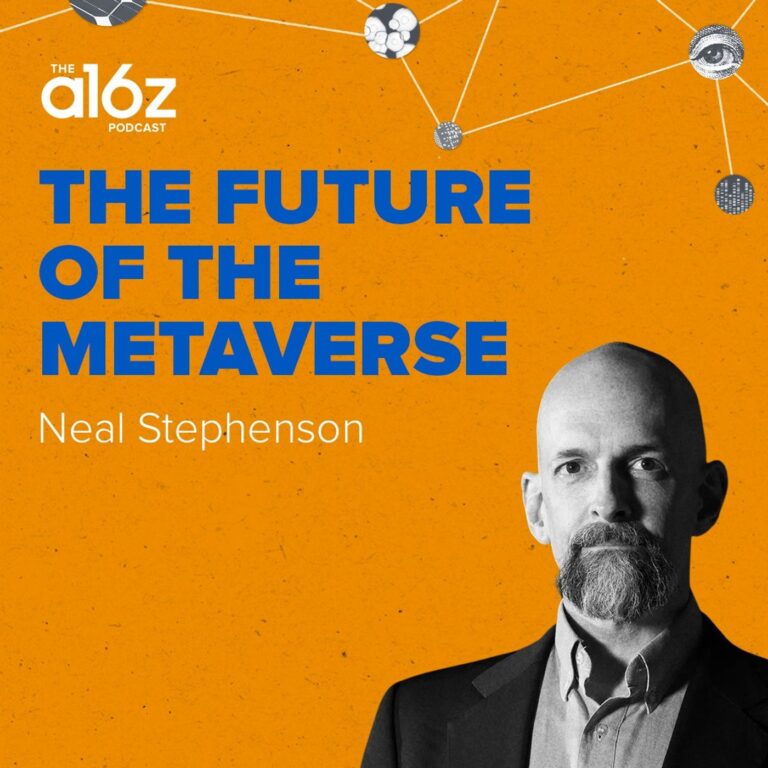
When Neal Stephenson coined “the metaverse” three decades ago, his book Snow Crash was found on the shelves of “science fiction”. While the book remains in that category, many of its concepts are now found in reality…
Fast forward to 2022, where numerous companies are now building toward their version of the metaverse, including Neal himself – working on Lamina1 – a blockchain company oriented toward creators.
While the present metaverses don’t perfectly mimic that from Stephenson’s early imagination, we get the unique opportunity to discuss the various design decisions that he’s making, but also the intersection between the metaverse and gaming, the involvement that AR/VR might play, the evolving role of IP, how artificial intelligence fits in, what he’s building and why, and where he gets all of his ideas from.
Timestamps:
0:00 – Introduction
1:20 – Tech’s highest impact position
4:35 – What is the metaverse?
6:46 – Interoperability
8:52 – Incentive alignment
13:06 – Immersion requirements
16:30 – VR engineering challenges
20:09 – Skeuomorphism
24:17 – Commercial VR/AR applications
27:26 – AI and gaming
30:51 – The value chain
38:13 – Right of refusal
42:05 – Good and bad tech
46:05 – Fighting “free”
49:16 – Building Lamina1
58:07 – Neal’s design designs
1:03:40 – Inspiration for Snow Crash
1:09:16 – Looking ahead from 2022
1:11:59 – Science fiction writing
1:13:46 – Carbon removal
Resources:
Neal’s Twitter: https://twitter.com/nealstephenson
Lamina1’s website: https://www.lamina1.com/
Stay Updated:
Find us on Twitter: https://twitter.com/a16z
Find us on LinkedIn: https://www.linkedin.com/company/a16z
Subscribe on your favorite podcast app:https://a16z.simplecast.com/
Follow our host: https://twitter.com/stephsmithio
Please note that the content here is for informational purposes only; should NOT be taken as legal, business, tax, or investment advice or be used to evaluate any investment or security; and is not directed at any investors or potential investors in any a16z fund. For more details please see a16z.com/disclosures.
Leave a Reply
You must be logged in to post a comment.