
0
0
Summary & Insights

The allure of a clean slate isn’t just cultural folklore; it’s a measurable psychological phenomenon known as the “fresh start effect,” which can be harnessed to break old habits and pursue new goals. Behavior scientist Katie Milkman explains that temporal landmarks like New Year’s Day, birthdays, or even Mondays create a sense of a “new chapter,” allowing us to mentally separate from our past selves and think more big-picture about our lives. This effect provides a powerful burst of motivation, making these moments prime opportunities for initiating change, as seen in spikes in goal-related Google searches or increased sign-ups for retirement savings plans when linked to a personal fresh start date.

However, the initial momentum of a fresh start is not a guarantee of lasting change. Research indicates that while these moments are excellent for kickstarting new behaviors, the long-term success rate for resolutions remains notoriously low, with some studies showing only about 8% of people fully achieve their goals. The conversation explores how follow-through requires more than just motivation; it demands strategies to overcome inevitable obstacles and to rebuild routines, especially after a disruption. This was vividly illustrated when a London Tube strike forced commuters to find new routes, and 5% permanently stuck with a better path—a real-world example of an unintended fresh start leading to improved habits.

The episode further complicates the picture by examining how the impact of a fresh start depends on context and prior performance. Drawing on an inventive study of Major League Baseball trades, researcher Heng Chen Dai found that a statistical “reset” (when a player switches leagues) helped underperforming players improve but actually harmed the performance of those who were previously doing well. This suggests that a fresh start is most beneficial when we are struggling or seeking a change, rather than when we are already in a successful groove. Ultimately, the podcast frames fresh starts—whether chosen, like a career move, or forced, like a pandemic—as powerful psychological tools, but tools that work best when combined with flexibility, self-compassion, and a practical plan for sustaining change.

Surprising Insights

  • Mondays can be more powerful than New Year’s for fresh starts. While New Year’s is the iconic reset, the weekly cycle of a Monday—a return to routine after a break—often provides a stronger and more frequent psychological “new beginning.”
  • Disruptions to routine, even negative ones, can inadvertently create better habits. The London Tube strike study showed that a forced change in commute led 5% of people to discover and permanently adopt a more efficient or pleasant route.
  • A fresh start can backfire for high performers. The baseball trade research revealed that players who were traded and had their batting average reset to zero performed worse if they were already having a strong season, possibly due to broken momentum and added pressure.
  • Building habits with flexible timing may be more effective than rigid routines. Contrary to the assumption that doing an activity at the same exact time daily builds the strongest habit, one experiment found that people who practiced flexibility formed more lasting habits.
  • The “fresh start effect” is a recently coined and studied term. Despite the ancient, universal human appeal of new beginnings, the specific behavioral concept was only formally named and rigorously investigated by academics in the last decade.

Practical Takeaways

  • Schedule goal starts on personal fresh start dates. Leverage the psychological power of temporal landmarks by launching a new habit on your birthday, the start of a new season, a Monday after a vacation, or the first day of a new month, not just January 1st.
  • Embrace disruptions as opportunities for positive change. When your routine is unavoidably broken—by travel, a schedule change, or even a minor life event—consciously use that moment to reassess and install a better habit, as commuters did after the Tube strike.
  • Give yourself a “mulligan” after a setback. If stress or circumstance derails your progress, grant yourself a formal do-over. Declare a new start date without guilt, leveraging the fresh start effect to get back on track.
  • Use environmental changes to facilitate change. A change in physical location, whether moving homes, rearranging your office, or even working from a café, can disrupt old cues and make it easier to establish new behaviors.
  • Focus on fresh starts when you’re struggling. The research suggests reset mechanisms are most advantageous when you’re below your desired performance level. If you’re already succeeding, be wary of changes that might break your effective rhythm.

(Note: A version of this episode originally ran in 2019.)

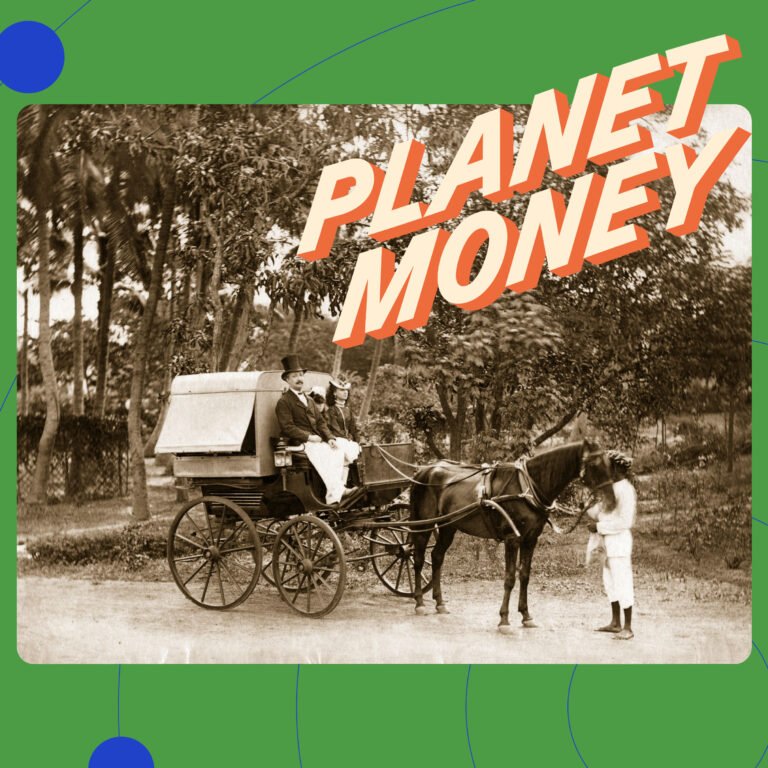
In 1794, George Washington decided to raise money for the federal government by taxing the rich. He did it by putting a tax on horse-drawn carriages.

The carriage tax could be considered the first federal wealth tax of the United States. It led to a huge fight over the power to tax in the U.S. Constitution, a fight that continues today.

Listen back to our 2019 episode: “Could A Wealth Tax Work?”

Listen to The Indicator’s 2023 episode: “Could SCOTUS outlaw wealth taxes?”

This episode was hosted by Greg Rosalsky and Bryant Urstadt. It was originally produced by Nick Fountain and Liza Yeager, with help from Sarah Gonzalez. Today’s update was produced by Willa Rubin and edited by Molly Messick and our executive producer, Alex Goldmark.

Help support Planet Money and hear our bonus episodes by subscribing to Planet Money+ in Apple Podcasts or at plus.npr.org/planetmoney.

Learn more about sponsor message choices: podcastchoices.com/adchoices

NPR Privacy Policy

Leave a Reply

NPRNPR
Let's Evolve Together
Logo