
0
0
Summary & Insights

The latest inflation report may be the most important economic story of the year, and it’s likely wrong. A deeper analysis suggests inflation isn’t the reported 2.7% but a more stubborn 3%, a discrepancy stemming from a government shutdown in October that prevented price data collection. This isn’t a conspiracy but a statistical flaw with real consequences, painting a grimmer picture of persistent post-tariff price increases. Meanwhile, the conversation shifts to a global flashpoint, examining the intense economic pressure cooker in Iran where hyperinflation and a currency in freefall have sparked the most significant protests against the regime since 1979.

The discussion with former IMF chief economist Maurice Obstfeld reveals that Iran’s economic collapse, driven by sanctions and exacerbated by internal mismanagement and water crises, has reached a boiling point. The U.S. response—a threatened 25% tariff on any nation trading with Iran—is analyzed more as political theater than effective policy, unlikely to sway a regime fighting for its survival and potentially damaging alliances with key partners like Turkey and the UAE. The greater risk lies in the potential for military escalation, which could destabilize the region further and impact oil markets, though a clear strategic outcome remains elusive.

Back on the domestic front, economist Mark Zandi unpacks the technical failure behind the inflation numbers and points to a more insidious trend: the direct impact of AI. Soaring electricity prices, up nearly 7% year-over-year, are heavily driven by the colossal energy demands of data centers, a pressure that will only intensify. This intersects with a profound concern over the Federal Reserve’s independence, as political pressure from the White House threatens to repeat the mistakes of the Nixon era, potentially locking in higher inflation for the long term by prioritizing short-term political gains over economic stability.

Surprising Insights

  • The official Consumer Price Index (CPI) is currently flawed and underreporting inflation due to a data gap during the October government shutdown; adjusted figures show inflation is likely a full 3%, not 2.7%.
  • Soaring electricity prices (up 6.7% year-over-year) are significantly driven by the energy demands of AI data centers, a cost pressure still in its “early innings.”
  • A proposed 25% U.S. tariff on countries trading with Iran is viewed by experts as largely “performative” and unlikely to change the regime’s behavior, as it is seen as a standard tool in the administration’s political toolbox rather than a coherent economic strategy.
  • The Fed’s independence is under unprecedented direct pressure, with historical parallels to the Nixon-Burns era suggesting that political influence over interest rates could lay the groundwork for sustained higher inflation.
  • The Iranian regime is facing its most severe internal threat since 1979, fueled not just by political dissent but by an extreme economic breakdown including hyperinflation above 50% and a currency that lost over 80% of its value in a year.

Practical Takeaways

  • Treat recent government inflation reports with healthy skepticism and seek out third-party analyses, as methodological issues have created a persistent downward bias that will last until at least next October.
  • Prepare for continued increases in utility bills, as electricity prices are expected to remain elevated for the next few years due to surging demand from AI and data center infrastructure.
  • Watch the Federal Reserve chair nomination and the Supreme Court case on Fed governor removals closely, as these will be critical indicators of whether central bank independence will be maintained, with major implications for long-term interest rates and inflation.
  • When evaluating dramatic policy announcements like broad tariffs, consider their practical enforceability and the geopolitical trade-offs with allied nations, as they may be more symbolic than substantive.
  • Recognize that geopolitical instability in regions like Iran can have contained but direct market effects, primarily through oil price volatility, even if broader regional spillover is currently assessed as limited.

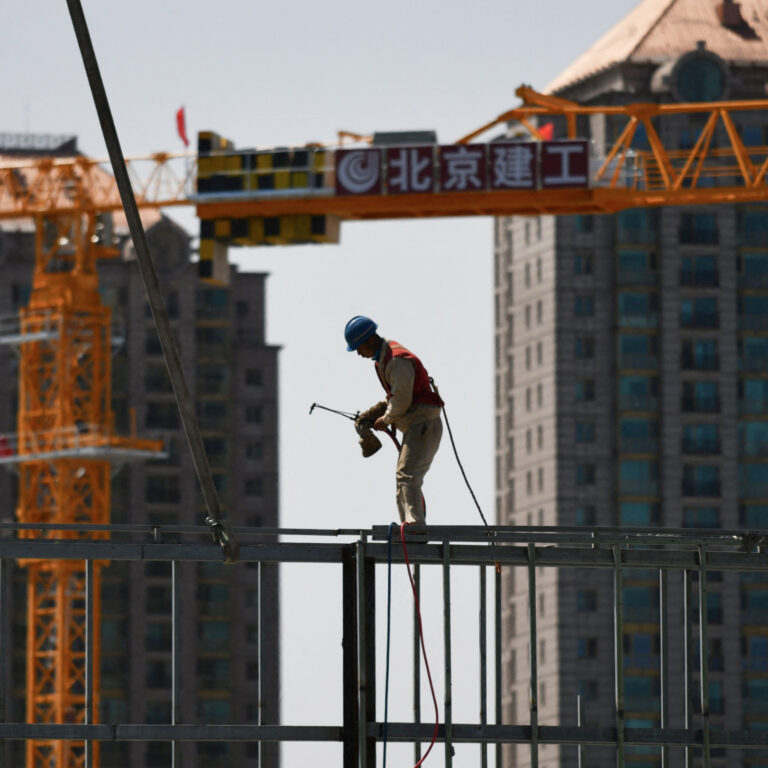
China’s economic growth for the past few decades has been extraordinary. And much of that growth was fueled by real estate – it was like this miraculous economic engine for the country. But recently, that engine seems to have stopped working. And that has raised all kinds of questions not just for China but also for the global economy.

Today on the show, we look at what’s happening inside China’s real estate market. And we try to answer the question: how did we get here?

Help support Planet Money and get bonus episodes by subscribing to Planet Money+ in Apple Podcasts or at plus.npr.org/planetmoney.

Learn more about sponsor message choices: podcastchoices.com/adchoices

NPR Privacy Policy

Leave a Reply

NPRNPR
Let's Evolve Together
Logo