

0
0
Summary & Insights

The very act of sitting in a theater, listening to staged conversations and judging the characters, is argued to be nothing less than the ancient, fundamental human practice of gossip. This provocative idea from Broadway producer Rocco Landisman frames theater not as a highbrow art form but as a primal, shared experience of observing human interaction and making sense of it together. It’s a fitting lens for a deep dive into the precarious and passionate world of creating a new musical, where gossip, speculation, and judgment are constant companions alongside artistry and finance.

The episode follows the arduous, years-long journey of a new musical, Three Summers of Lincoln, from its conception as a pandemic-era idea between two producers to a high-stakes workshop performance. The narrative traces how writer Joe DiPietro overcame initial skepticism to craft a story focusing on Lincoln’s radicalization and his fraught relationship with abolitionist Frederick Douglass. The creative team expands to include co-lyricist and performer Daniel J. Watts and composer Crystal Monet Hall, each bringing a distinct voice to shape the show’s sound and perspective. The process reveals a development pipeline where producers Alan Shore and Richard Winkler invest hundreds of thousands of their own dollars in workshops and readings, hoping to create something special enough to eventually attract outside investors and a prestigious nonprofit theater partner, the La Jolla Playhouse.

Despite the artistic excitement, the underlying economics are brutally clear. Landisman bluntly compares investing in Broadway to horse racing, with only 15-20% of shows ever making their money back. The creators themselves operate on faith and side hustles; composer Crystal Monet Hall notes that a first-time composer might get an advance of $18-$25,000 for years of work, while Daniel Watts acknowledges he can earn more from a single episode of TV than from his extensive work on the musical. The workshop, starring the revered Brian Stokes Mitchell as Lincoln, generates palpable excitement, demonstrating the magical alchemy of live performance. Yet, in a stark reminder of the fragility of this world, the episode concludes with a devastating cliffhanger: just before tickets go on sale, the star actor quits the project for undisclosed personal reasons, leaving the entire future of the show in jeopardy.

Surprising Insights

  • Theater as Primal Gossip: A veteran producer reframes the entire art of theater as a formalized, communal version of the basic human instinct to observe people interact and talk about them—calling it “the most fundamental art of all.”
  • Abysmal Investment Odds: Broadway production is compared to horse racing, with only 15-20% of shows ever earning their money back, making it one of the riskiest entertainment investments.
  • The Stark Wage Disparity: A performer and co-lyricist reveals that the fee for his extensive work on a developing musical can be eclipsed by the earnings from a single two-day episode of a TV show, highlighting the vast economic gulf between theatrical and screen work.
  • Unconventional Casting as a Creative Spark: The team behind Three Summers of Lincoln made the deliberate, provocative choice to have a Black man (Brian Stokes Mitchell) play Abraham Lincoln while other historical figures are cast according to their race, seeing it as a way to deepen the themes of the story.

Practical Takeaways

  • Persistence precedes permission: Rocco Landisman’s career began by writing letter after letter to country legend Roger Miller, who had never seen a Broadway musical, eventually wearing down his resistance to create the hit Big River.
  • Embrace the “terrible idea.” Many groundbreaking musicals, from Hamilton to Sweeney Todd, sound like terrible ideas on paper. The creators of Three Summers of Lincoln had to push past their own initial skepticism to discover the compelling story within.
  • Develop with your own capital to prove value. The producers funded the musical’s early development themselves, believing it was irresponsible to ask outside investors for money until they had a proven, workshop-tested product that demonstrated its potential.
  • Collaboration across difference fuels depth. The writers intentionally built a team with different backgrounds (white and Black, different generations) to ensure the story about race and presidency was examined from multiple angles, enriching the final product.
  • Understand the non-profit/commercial symbiosis. Many Broadway shows are first developed and premiered at non-profit regional theaters (like La Jolla Playhouse) through “enhancement deals,” where commercial producers fund a more lavish production that serves as a tryout for Broadway.

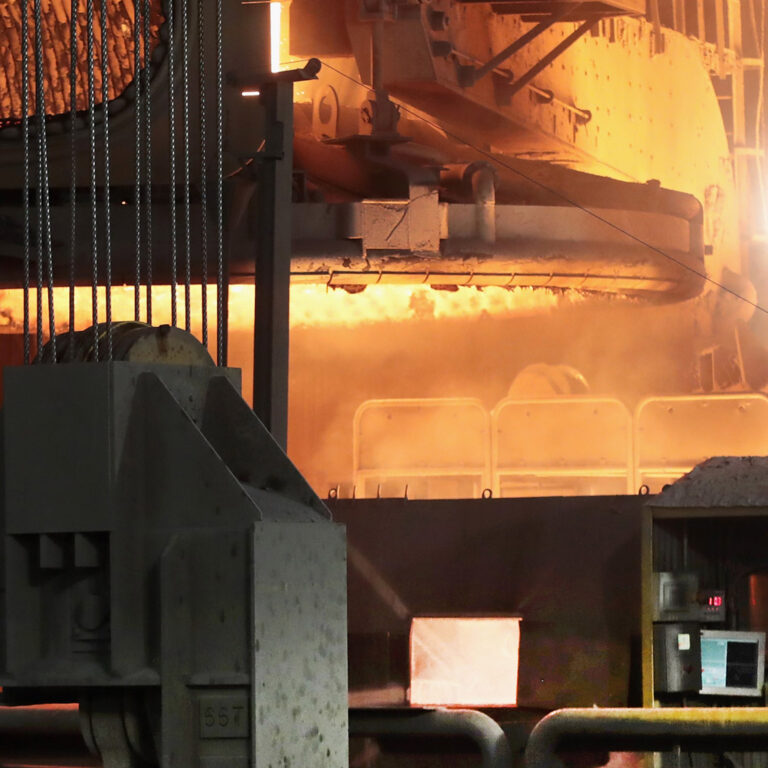
Steel manufacturing was at one point the most important industry in the United States. It was one of the biggest employers, a driver of economic growth, and it shaped our national security. Cars, weapons, skyscrapers… all needed steel.

But in the second half of the 20th century, the industry’s power started to decline. Foreign steel companies gained more market power and the established steel industry in the U.S. was hesitant to change and invest in newer technologies. But then, a smaller company took a chance and changed the industry.

On today’s episode: What can the fall of a once-great industry teach us about innovation and technology? And why you should never underestimate an underdog.

This episode was hosted by Erika Beras and Mary Childs. It was produced by Willa Rubin and edited by Jess Jiang. It was engineered by Cena Loffredo. It was fact-checked by Sierra Juarez. Our executive producer is Alex Goldmark.

Help support Planet Money and get bonus episodes by subscribing to Planet Money+ in Apple Podcasts or at plus.npr.org/planetmoney.

Learn more about sponsor message choices: podcastchoices.com/adchoices

NPR Privacy Policy

Leave a Reply

NPRNPR
Let's Evolve Together
Logo