

Summary & Insights
The concept of being “strategically broke”—choosing to live on very little money to buy maximum freedom, learning, and adventure—isn’t a failure but a deliberate design. This idea anchors a wide-ranging conversation where Sean, a successful entrepreneur, reflects on his early career missteps and the philosophies that led to his eventual success. He argues that the greatest risk for ambitious people isn’t failure but getting stuck in comfortable mediocrity, which slowly drains your time, energy, and self-belief. Success, he suggests, is less about relentless hard work and more about smarter choices in what you work on, who you work with, and ensuring the work itself is rewarding.
A central theme is the importance of motion over perfect direction. Sean illustrates this with the story of quitting a high-paying job to pursue a sushi restaurant idea that ultimately failed. However, the motion of that endeavor—learning negotiation, marketing, and video editing—built skills that became invaluable later. He emphasizes that waiting for perfect clarity leads to stagnation, while taking action, even in a “wrong” direction, builds momentum and makes course correction easier. This ties into the critical skill of quickly reversing bad decisions rather than lingering in them due to fear of looking foolish or facing uncertainty.
The conversation shifts to the powerful forces that shape outcomes: proximity and seriousness. Surrounding yourself with people who embody the skills or lifestyle you want creates a “pull” that makes growth almost effortless. Yet, most people aren’t serious competitors; they abandon pursuits long before reaching a level of competence. Sean shares the “Rule of 100″—the idea that simply committing to create 100 iterations of something (like videos), improving one element each time, will propel you far beyond the vast majority who give up early. Ultimately, the key is to let your natural curiosities guide your project selection, creating a flywheel where enjoyment fuels practice, skill builds results, and results fuel further enjoyment.
Surprising Insights
- Hard work is overrated as a primary success factor. Sean ranks it as perhaps the fourth or fifth most important variable, behind more critical levers like project selection, choosing the right people to work with, and timing.
- Mediocrity is a greater risk than failure. For high-potential individuals, getting stuck in something that’s just “okay” is more dangerous because it saps willpower, time, and belief over a long period, whereas failure is a clear, quick reset that frees up your most valuable asset: time.
- The “Rule of 100” reveals that most competitors aren’t serious. Mr. Beast’s advice to aspiring YouTubers—make 100 videos, improving one thing each time—is a filter almost no one passes, meaning serious commitment immediately places you in a tiny pool of real contenders.
- A key trait for a great partner is being “down.” Beyond Warren Buffett’s triad of energy, intelligence, and integrity, Sean adds a fourth, crucial quality: someone who is “down” to try half-baked ideas, embrace adventure, and grind through difficulty without unnecessary drama.
- Your inner voice is the director of your life’s movie. While we often prioritize external opinions, the most important voice shaping your decisions and reactions is the internal one nobody else hears; strengthening your own opinion of yourself is a critical muscle to develop.
Practical Takeaways
- Apply the “strategically broke” mindset by calculating the minimum amount of money you need to secure maximum freedom and learning, especially early in your career. Optimize for time, adventure, and skill acquisition over pure salary.
- Use the “motion over direction” principle. If you’re unsure of the perfect path, start paddling in a promising direction. It’s easier to change course when you’re already in motion than to wait on the shore for the fog to clear.
- To discover your natural talents, ask trusted people what they see as your superpower—what comes easily to you that seems like a grind to others. Also, examine your “five to nine” hobbies: what do you do for fun that others would find tedious?
- Intentionally select your networks. Be deliberate about the professional, geographic, and informational networks you join (e.g., who you spend time with, what content you consume, what city you live in), as these connections upstream massively influence your opportunities downstream.
- Test your current projects with a simple question: “If this ended tomorrow, would I immediately restart the exact same thing with the same people?” If the answer isn’t a “hell yes,” you’re likely succumbing to inertia and should consider a change.
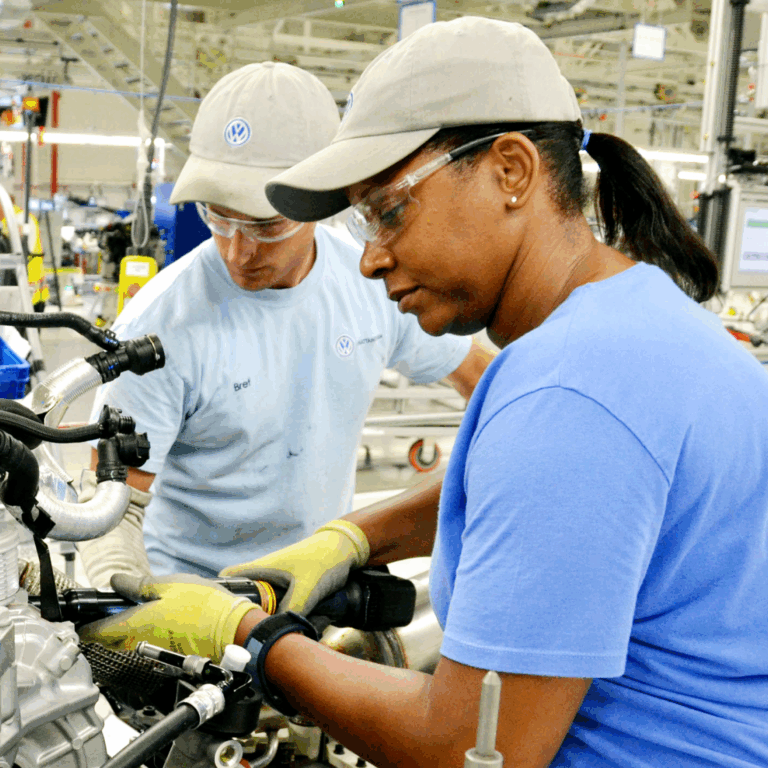
Union membership in the U.S. has been declining for decades. But, in 2022, support for unions among Americans was the highest it’s been in decades. This dissonance is due, in part, to the difficulties of one important phase in the life cycle of a union: setting up a union in the first place. One place where that has been particularly clear is at the Volkswagen plant in Chattanooga, Tennessee.
Back in 2008, Volkswagen announced that they would be setting up production in the United States after a 20-year absence. They planned to build a new auto manufacturing plant in Chattanooga.
Volkswagen has plants all over the world, all of which have some kind of worker representation, and the company said that it wanted that for Chattanooga too. So, the United Auto Workers, the union that traditionally represents auto workers, thought they would be able to successfully unionize this plant.
They were wrong.
In this episode, we tell the story of the UAW’s 10-year fight to unionize the Chattanooga plant. And, what other unions can learn from how badly that fight went for labor.
This episode was hosted by Amanda Aronczyk and Nick Fountain. It was produced by Willa Rubin. It was engineered by Josephine Nyounai, fact-checked by Sierra Juarez, and edited by Keith Romer. Alex Goldmark is our executive producer.
Help support Planet Money and get bonus episodes by subscribing to Planet Money+ in Apple Podcasts or at plus.npr.org/planetmoney.
Learn more about sponsor message choices: podcastchoices.com/adchoices


Leave a Reply
You must be logged in to post a comment.