
Planet Money
(Note: A version of this episode originally ran in 2024.)
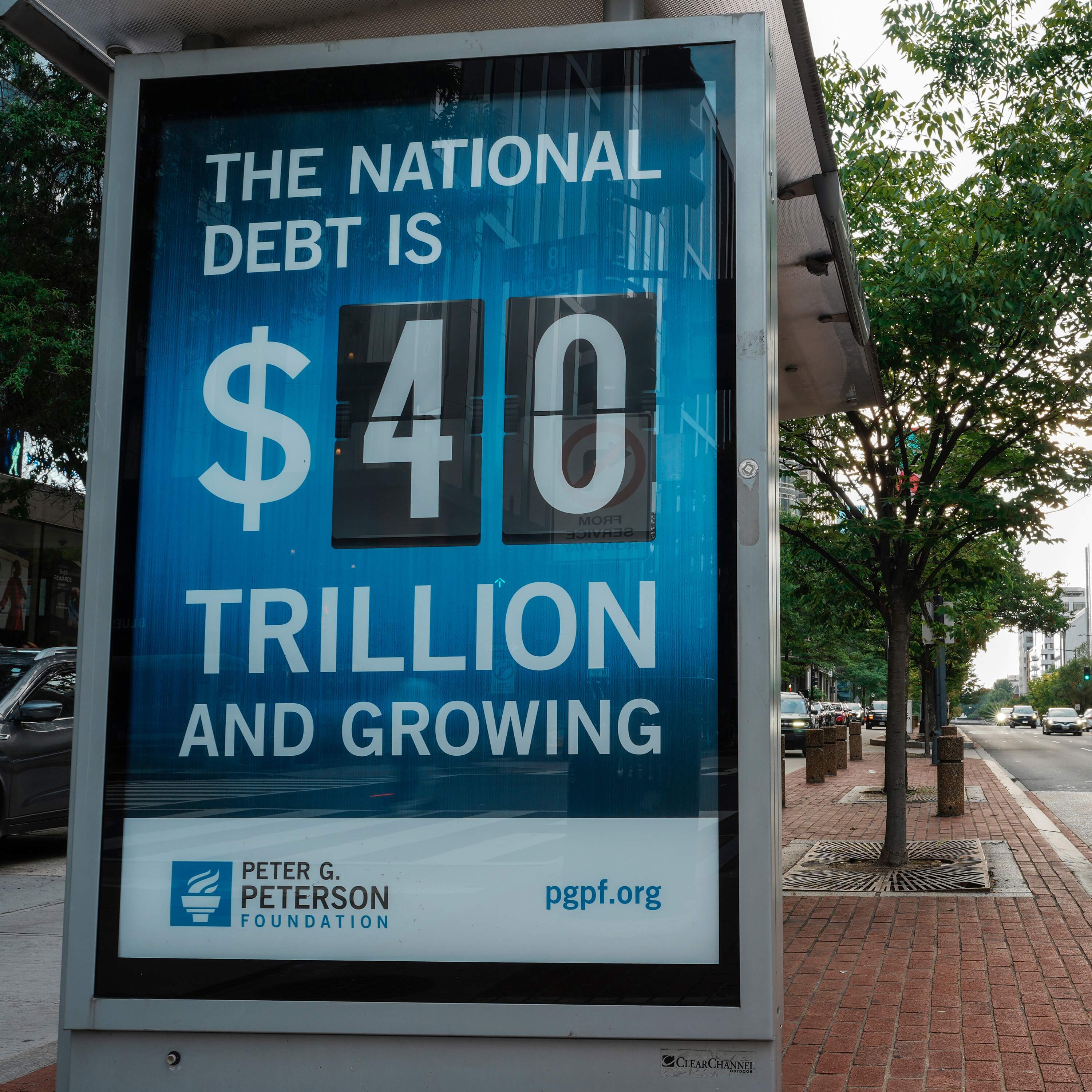
$40,000,000,000,000. Four commas. Thirteen zeroes. It’s an eye-popping, almost infinite-sounding pile of money. And every time the debt passes a big round number, almost everyone asks the same question: How much debt is too much?
It’s maybe the most important question in macroeconomics. It’s also surprisingly hard to answer. When two economists tried to answer it back in 2010, it ignited a research slugfest that lasted a decade.
We did a show on this question in 2024, outlining everything we know and don’t know about when the national debt becomes a problem. But a lot has changed. Interest rates have risen and stayed high. Spending has steamrolled ahead. Doves have become hawks.
So on today’s show, we update our 2024 episode to revisit the age-old question: Is our debt finally too much?
Read Planet Money:
- Our book: Planet Money: A Guide to the Economic Forces That Shape Your Life
- Our weekly longform Planet Money newsletter
- Our weekly Indicator round-up newsletter
Follow:
Support public media with NPR+ and enjoy perks for over 25 podcasts like this one. This show’s perks include bonus episodes and sponsor-free listening. Learn more at plus.npr.org.
Our original episode was produced by Willa Rubin and edited by Molly Messick. This update was reported and produced by Vito Emanuel. It was fact checked by Sierra Juarez. It was engineered by Kwesi Lee. And it was edited by Alex Goldmark, Planet Money’s executive producer.
See pcm.adswizz.com for information about our collection and use of personal data for sponsorship and to manage your podcast sponsorship preferences.
-
The U.S. is the world’s bribery cop. Is that about to change?
The U.S. has been policing bribery all over the world for nearly half a century using a law called the Foreign Corrupt Practices Act. But now, President Trump has said that this anti-corruption law is…
-
Jay & Shai’s debt ceiling adventure (Update)
Note: A version of this episode first ran in 2023. Every year, the U.S. government spends more money than it takes in. In order to fund all that spending, the country takes on debt. Congress…
-
Why I joined DOGE
What was it like to work inside Elon Musk’s DOGE? The cost-cutting initiative promised transparency, but most of its actions have been shrouded in secrecy.For months, there were reports of software engineers and Trump loyalists…
-
Are Trump’s tariffs legal?
When President Trump announced his sweeping new tariffs this year, many trade law experts were startled. Typically, presidents don’t have the authority to impose broad tariffs with a snap of their fingers. But Trump’s advisors…
-
When Chinese manufacturing met Small Town, USA
Over the past decade, politicians from both parties have courted American voters with an enticing economic prospect – the dream of bringing manufacturing and manufacturing jobs back to America. They’ve pushed for that dream with…
-
Trump’s crypto interests (Two Indicators)
Today on the show – our crypto president. Just before President Donald Trump began his second administration in January, he and his business partners launched the $TRUMP coin. It’s a memecoin that quickly raked in…
-
The U.S.-China trade war, according to game theory
Over the last few months U.S.-China trade relations have been pretty hard to make sense of – unless you look at what’s happening through the lens of game theory. Game theory is all about how…
-
Why does the government fund research at universities?
American universities are where people go to learn and teach. They’re also where research and development happens. Over the past eight decades, universities have received billions in federal dollars to help that happen. Those dollars…
-
The secret world behind those scammy text messages
You might have seen these texts before. The scam starts innocently enough. Maybe it’s a “Long time no see” or “Hello” or “How are you.” For investigative reporter Zeke Faux it was – “Hi David,…
-
How economists (and TikTok) know if a recession is coming
Lately we’ve noticed that something we think about all the time here at Planet Money is having a viral moment: recession indicators! From the more practical (like sales for lipstick going up and men’s underwear…