
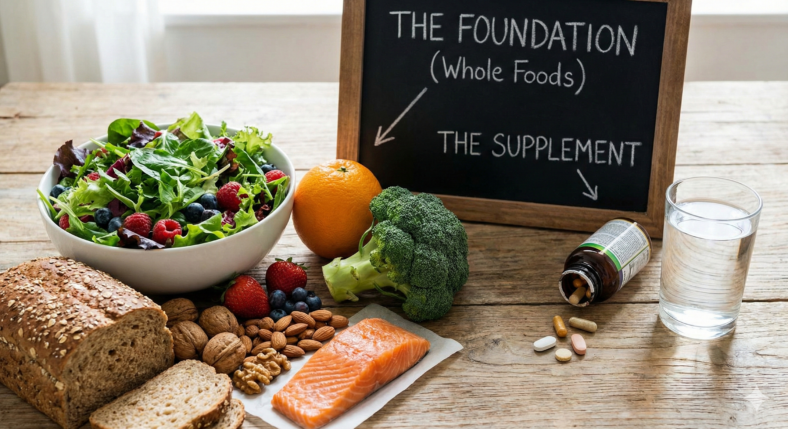
Research consistently shows that nutrients from whole foods are better absorbed and utilized than those from supplements. The Harvard School of Public Health emphasizes that a nutrient-dense diet is the foundation of good health, and supplements should only fill specific gaps, not replace whole foods. When you get your vitamins and minerals from food, they come packaged with enzymes, cofactors, and other bioactive compounds that enhance their effectiveness.
Consider an orange. When you eat one, you’re not just getting vitamin C. You’re getting fiber that slows sugar absorption, antioxidants that protect your cells, flavonoids that support heart health, and dozens of other compounds we’re still learning about. A vitamin C tablet gives you one isolated nutrient, stripped of all the supporting players that make it work effectively in your body.
When Supplements Actually Make Sense
That said, supplements aren’t useless. There are legitimate situations where they can be beneficial, particularly when dietary intake is insufficient, or when seeking to optimize one’s health. Let’s look at some of the most commonly recommended supplements and what the science actually says about them.
Vitamin D: The Sunshine Vitamin
Vitamin D has become one of the most widely recommended supplements, and for good reason. Essential for bone health, immune function, and even mood regulation, vitamin D deficiency is surprisingly common, especially in people with limited sun exposure. Unlike most nutrients, vitamin D is difficult to obtain in adequate amounts from food alone.
However, before you start taking vitamin D supplements, there’s an important step: get tested. A simple blood test can tell you if you’re actually deficient. Not everyone needs supplementation, and taking high doses when you don’t need them can lead to toxicity. If you are deficient, your healthcare provider can recommend the appropriate dosage for your situation.
Food sources of vitamin D include fatty fish like salmon and mackerel, egg yolks, and fortified dairy products. But if you’re not getting adequate sun exposure or consuming these foods regularly, supplementation may be necessary.
Omega-3 Fatty Acids: Heart and Brain Support
Omega-3 fatty acids, particularly EPA and DHA found in fish oil, have solid research backing their benefits for heart health and cognitive function. They help reduce inflammation, lower triglyceride levels, and may support brain health as we age.
The best source of omega-3s is fatty fish: salmon, mackerel, sardines, and anchovies. If you’re eating these fish two to three times per week, you’re probably getting enough omega-3s without supplementation. But if you rarely eat fish, or if you’re vegetarian or vegan, a supplement might be worthwhile.
For plant-based eaters, algae-based omega-3 supplements provide EPA and DHA without the fish. However, it’s worth noting that while flaxseeds, chia seeds, and walnuts contain omega-3s (in the form of ALA), your body must convert ALA to EPA and DHA, and this conversion is often inefficient.
Potassium: The Overlooked Mineral
Potassium is vital for muscle function, nerve signaling, and heart health. It helps regulate blood pressure by counteracting the effects of sodium. Research suggests that adequate potassium intake can influence how easily you fall asleep and how restful your sleep is. Some studies even link higher evening potassium intake with fewer insomnia symptoms. The good news is that potassium is abundant in whole foods: bananas, oranges, potatoes, sweet potatoes, spinach, beans, and tomatoes are all excellent sources.
Here’s where diet really matters: in theory, a balanced diet can provide all the potassium you need, but in practice many people don’t eat enough potassium-rich foods.
Creatine: Beyond Athletic Performance
Creatine is naturally produced in your body from amino acids and found in red meat and fish. While it’s best known for supporting muscle energy production during high-intensity exercise, emerging research reveals that creatine’s benefits extend far beyond the gym, making it one of the most important and well-researched supplements available.
Unlike many supplements with questionable benefits, creatine has decades of robust scientific support. It works by increasing the availability of phosphocreatine in cells, facilitating rapid regeneration of ATP (adenosine triphosphate), your body’s primary energy currency. This mechanism benefits not just muscles, but every cell that requires energy, especially the brain.
Muscle and Athletic Performance
For those engaged in regular strength training or high-intensity sports, creatine supplementation (typically 3-5 grams per day) genuinely improves strength, power, and muscle mass gains. It enhances performance during activities like weightlifting, sprinting, and swimming, while also reducing muscle cell damage and inflammation, accelerating recovery post-exercise.
Cognitive Function and Brain Health
One of creatine’s most compelling but underappreciated benefits is its support for brain health. Your brain requires substantial energy, and creatine helps replenish ATP levels, potentially enhancing memory, reasoning, and cognitive processing. Research shows that creatine supplementation can reduce mental fatigue and improve performance on cognitive tasks, particularly during periods of stress or sleep deprivation. These cognitive benefits are especially pronounced in older adults, making creatine valuable not just for athletes, but for anyone interested in maintaining mental sharpness.
Aging and Muscle Preservation
As we age, we experience sarcopenia (the gradual loss of muscle mass and strength), which increases the risk of falls, frailty, and loss of independence. Creatine supplementation, combined with resistance training, has been shown to counteract this decline, promoting muscle preservation and overall physical function in older adults. This makes creatine particularly important as we get older, not just for maintaining muscle mass, but for preserving quality of life and functional independence.
Who Benefits Most
Vegetarians and vegans see particularly pronounced benefits from creatine supplementation since they get none from their diet, whereas meat-eaters already have some dietary intake. However, even regular meat-eaters often don’t consume enough to maximize creatine stores in muscles and brain tissue.
Safety and Considerations
When used at appropriate doses (5-10 grams daily), creatine is generally considered safe for healthy individuals, with decades of research supporting its safety profile. Some people may experience minor weight gain due to water retention in muscle cells. However, individuals with pre-existing kidney conditions should consult a healthcare professional before beginning supplementation, as creatine is processed through the kidneys.
The Case for Food First
Here’s what often gets lost in discussions about supplementation: the nutrients we know about and can put in a pill represent only a fraction of the beneficial compounds in whole foods. Scientists are continually discovering new phytonutrients, antioxidants, and bioactive compounds in plants and other foods. When you rely primarily on supplements, you’re missing out on these undiscovered or less-studied compounds that may play crucial roles in health.
Fiber is a perfect example. No multivitamin can replicate the benefits of dietary fiber for gut health, blood sugar regulation, and satiety. The complex carbohydrates in whole grains, the polyphenols in berries, the glucosinolates in broccoli: these aren’t in your supplement bottle, but they’re essential for optimal health.
Additionally, whole foods naturally regulate nutrient absorption in ways that supplements can’t match. For instance, vitamin C enhances iron absorption from plant foods, while calcium and vitamin D work together for bone health. These synergies happen automatically when you eat a varied diet but require careful planning with supplements.
What a Good Diet Actually Looks Like
Before you even think about supplements, make sure your diet includes:
Plenty of vegetables and fruits: Aim for a variety of colors, as different pigments represent different beneficial compounds. Dark leafy greens, berries, citrus fruits, cruciferous vegetables, and colorful peppers should all make regular appearances on your plate.
Whole grains over refined: Brown rice, quinoa, oats, and whole wheat provide fiber, B vitamins, and minerals that are stripped away in refined grains.
Quality protein sources: Fish, poultry, eggs, legumes, and if you eat meat, choose grass-fed when possible. Each protein source brings its own nutritional profile to the table.
Healthy fats: Olive oil, avocados, nuts, and seeds provide essential fatty acids and fat-soluble vitamins.
Minimal processed foods: The more processed a food is, the more nutrients are typically lost, and the more additives are often included.
Making Smart Supplement Decisions
If you decide that supplements are appropriate for your situation, here’s how to approach them intelligently:
- Start with testing: If you suspect a deficiency, get tested before supplementing. This is particularly important for vitamin D, iron, and B12.
- Choose quality products: Look for supplements that have been third-party tested by organizations like USP, NSF, or ConsumerLab. The supplement industry is poorly regulated, and quality varies dramatically.
- Consult professionals: Talk to your doctor or a registered dietitian before starting any supplement regimen, especially if you take medications or have health conditions.
- Keep it simple: More isn’t always better. A few targeted supplements based on actual needs are superior to handfuls of pills taken “just in case.”
- Reassess regularly: Your nutritional needs change over time. What makes sense for you now might not be necessary in six months, especially if you improve your diet.
The Bottom Line
Supplements can be effective tools in specific situations. They can help correct deficiencies, support increased needs during certain life stages (like pregnancy), or fill gaps when dietary intake is impossible to optimize. Vitamin D for people with limited sun exposure, B12 for vegans, omega-3s for those who don’t eat fish, and creatine for muscle preservation, cognitive function, and healthy aging all have legitimate uses backed by decades of research.
Creatine deserves special mention as one of the most well-researched and effective supplements available, with benefits extending far beyond athletic performance to include cognitive health and age-related muscle preservation. Unlike many supplements, creatine has consistent, robust scientific support and a strong safety profile, making it worthy of consideration for a broader population than just athletes.
But here’s what you need to hear: supplements are supplements, not substitutes. They’re meant to add to a healthy diet, not replace it. No combination of pills can replicate the complex nutritional profile of whole foods or provide the synergistic benefits of a varied, nutrient-dense diet.
References:
Harvard School of Public Health: “Get Nutrients from Food, Not Supplements” (health.harvard.edu)
Mayo Clinic: “Multivitamins and Supplements: To Take or Not to Take” (mayoclinichealthsystem.org)
Time Magazine: “Should I Take Vitamin D Supplement?” (time.com)
National Institutes of Health: “Should You Take Dietary Supplements?” (newsinhealth.nih.gov)
Academy of Nutrition and Dietetics: “Do You Need to Take Supplements?” (eatright.org)
Huberman Lab Podcast: Dr. Gabrielle Lyon: How to Exercise & Eat for Optimal Health & Longevity – Discussion of creatine’s benefits for muscle and brain health, including the finding that 5 grams affects skeletal muscle while 12 grams affects brain health
Huberman Lab Podcast: Perform with Dr. Andy Galpin: Nutrition to Support Brain Health & Offset Brain Injuries – Comprehensive review of creatine monohydrate for cognitive function, TBI prevention, and brain health across all populations

Leave a Reply
You must be logged in to post a comment.