
Summary & Insights


Could China be the “senior partner” in the U.S.-China relationship? This provocative question sets the stage for a deep dive into the shifting balance of global power, where the “big stick” is no longer just military might, but the control of rare earth minerals and the rapid ascent of biotechnology. While diplomatic summits often feel like “nothing burgers” of handshakes and platitudes, the underlying economic dependencies—particularly the U.S. reliance on Chinese pharmaceutical imports—suggest a much more complex and precarious dynamic.
The conversation shifts from high-level geopolitics to the specific rise of China as a biotech superpower. Once known primarily for cheap manufacturing and generic drugs, China has strategically spent decades recruiting “sea turtle” scientists—overseas-trained experts returning home—and aligning with global regulatory standards. This long-term vision has culminated in a highly efficient ecosystem where drug discovery is significantly faster and cheaper than in the West, leading to a surge in “out-licensing” deals where global giants like AstraZeneca and Pfizer pay for access to Chinese innovations.
The integration of AI into this medical evolution is creating a “fast lane” for drug development. By using in silico medicine, some Chinese firms are reporting staggering reductions in discovery time—in one case, reducing the number of candidates to test from hundreds of thousands down to just 78. As a massive “patent cliff” looms, threatening billions in revenue for Western Big Pharma, China is positioned to fill the void, potentially creating 30% of all new pharmaceutical innovations by 2030.
Surprising Insights
- The “Big Stick” of Rare Earths: China’s dominance isn’t just in mining (70%) but in processing (over 90%) rare earths, which are critical for Pentagon weapons systems, giving Beijing significant leverage over U.S. defense capabilities.
- The AI-Driven Discovery Leap: AI is moving beyond hype in Chinese biotech; some companies have achieved a 70% reduction in the time it takes to move from an initial hypothesis to a preclinical candidate.
- The “Sea Turtle” Strategy: China’s current biotech success is the result of a 40-year strategic plan starting under Deng Xiaoping to incentivize Western-trained scientists to return to China.
- Pharmaceutical Dependency: The U.S. is heavily dependent on China for Active Pharmaceutical Ingredients (APIs), with roughly half of all U.S. imported APIs originating from China.
Practical Takeaways
- Monitor the “Patent Cliff”: Investors and healthcare professionals should track the coming wave of patent expirations for major drugs, as this will create a vacuum that Chinese biotech firms are poised to fill.
- Diversify Supply Chain Thinking: For those in manufacturing or healthcare, the high concentration of API and rare earth processing in China highlights a critical need for supply chain resilience and the exploration of alternative sources like India.
- Watch the “Star Market”: Keep an eye on the Shanghai Stock Exchange Science and Technology Innovation Board (Star Market) as a leading indicator of where the next frontier of AI, robotics, and biotech IPOs will emerge.
- Embrace Open-Source AI: With Chinese open-source models gaining dominance in token usage and influencing global cybersecurity solutions, businesses should evaluate a hybrid approach to AI, rather than relying solely on closed U.S. models.
🛍️ Products & Resources Mentioned
- 📚 BookChina Cure: The Rise of a Biotech, AI, Medicine, and Global Health Superpower by Ruby Wang — The guest authored this book which explores China’s evolution into a global biotech and pharmaceutical superpower. View on Amazon →
- ⚡ DeviceLeesa Mattress — Recommended for improving recovery and overall health through quality sleep. View on Amazon →
- 💊 SupplementNutrafol Men — A dermatologist-recommended supplement designed to address root causes of thinning hair for men. View on Amazon →
Liệu Trung Quốc có thể trở thành “đối tác cấp cao hơn” trong mối quan hệ Mỹ-Trung? Câu hỏi đầy khiêu khích này mở đầu cho một cuộc phân tích sâu về sự thay đổi cán cân quyền lực toàn cầu, nơi “chiếc gậy lớn” không còn chỉ là sức mạnh quân sự, mà là quyền kiểm soát khoáng sản đất hiếm và sự trỗi dậy nhanh chóng của công nghệ sinh học. Trong khi các hội nghị thượng đỉnh ngoại giao thường mang lại cảm giác như những “vở kịch vô thưởng vô phạt” với những cái bắt tay và những lời sáo rỗng, thì sự phụ thuộc kinh tế tiềm ẩn—đặc biệt là việc Mỹ phụ thuộc vào dược phẩm nhập khẩu từ Trung Quốc—lại cho thấy một động lực phức tạp và bấp bênh hơn nhiều.
Cuộc đối thoại chuyển từ địa chính trị cấp cao sang sự trỗi dậy cụ thể của Trung Quốc với tư cách là một siêu cường công nghệ sinh học. Từng được biết đến chủ yếu với sản xuất giá rẻ và thuốc generic (thuốc phiên bản), Trung Quốc đã dành nhiều thập kỷ thực hiện chiến lược chiêu mộ các nhà khoa học “rùa biển”—những chuyên gia được đào tạo ở nước ngoài trở về quê hương—và điều chỉnh theo các tiêu chuẩn quản lý toàn cầu. Tầm nhìn dài hạn này đã kết tinh thành một hệ sinh thái hiệu quả cao, nơi việc tìm ra thuốc mới nhanh hơn và rẻ hơn đáng kể so với phương Tây, dẫn đến sự gia tăng các thương vụ “cấp phép ra ngoài” (out-licensing), trong đó các gã khổng lồ toàn cầu như AstraZeneca và Pfizer phải trả tiền để tiếp cận những đổi mới từ Trung Quốc.
Việc tích hợp AI vào cuộc tiến hóa y tế này đang tạo ra một “làn đường nhanh” cho phát triển thuốc. Bằng cách sử dụng y học mô phỏng (in silico), một số công ty Trung Quốc báo cáo mức giảm đáng kinh ngạc về thời gian nghiên cứu—trong một trường hợp, họ đã giảm số lượng ứng viên cần thử nghiệm từ hàng trăm nghìn xuống chỉ còn 78. Khi một “vực thẳm bằng sáng chế” (patent cliff) đang cận kề, đe dọa hàng tỷ đô la doanh thu của các tập đoàn dược phẩm lớn phương Tây, Trung Quốc đang ở vị thế sẵn sàng lấp đầy khoảng trống này, với tiềm năng tạo ra 30% tất cả các đổi mới dược phẩm mới vào năm 2030.
Những góc nhìn bất ngờ
- “Chiếc gậy lớn” từ Đất hiếm: Sự thống trị của Trung Quốc không chỉ nằm ở khai thác (70%) mà còn ở chế biến (hơn 90%) đất hiếm—những chất thiết yếu cho các hệ thống vũ khí của Lầu Năm Góc, mang lại cho Bắc Kinh đòn bẩy đáng kể đối với năng lực quốc phòng của Mỹ.
- Bước nhảy vọt trong nghiên cứu nhờ AI: AI không còn là lời quảng cáo thổi phồng trong ngành công nghệ sinh học Trung Quốc; một số công ty đã giảm được 70% thời gian chuyển từ giả thuyết ban đầu sang ứng viên tiền lâm sàng.
- Chiến lược “Rùa biển”: Thành công hiện tại của công nghệ sinh học Trung Quốc là kết quả của một kế hoạch chiến lược kéo dài 40 năm bắt đầu từ thời Đặng Tiểu Bình nhằm khuyến khích các nhà khoa học được đào tạo tại phương Tây trở về Trung Quốc.
- Sự phụ thuộc dược phẩm: Mỹ phụ thuộc nặng nề vào Trung Quốc về các thành phần dược phẩm hoạt tính (API), với khoảng một nửa số API nhập khẩu của Mỹ có nguồn gốc từ Trung Quốc.
Bài học thực tiễn
- Theo dõi “Vực thẳm bằng sáng chế”: Các nhà đầu tư và chuyên gia y tế nên theo dõi làn sóng hết hạn bằng sáng chế sắp tới của các loại thuốc chính, vì điều này sẽ tạo ra một khoảng trống mà các công ty công nghệ sinh học Trung Quốc sẵn sàng lấp đầy.
- Đa dạng hóa tư duy chuỗi cung ứng: Đối với những người trong lĩnh vực sản xuất hoặc y tế, việc tập trung cao độ quá trình chế biến API và đất hiếm tại Trung Quốc nhấn mạnh nhu cầu cấp thiết về khả năng phục hồi chuỗi cung ứng và việc tìm kiếm các nguồn thay thế như Ấn Độ.
- Quan sát “Thị trường Star”: Hãy theo dõi Bảng Đổi mới Khoa học và Công nghệ của Sở Giao dịch Chứng khoán Thượng Hải (Star Market) như một chỉ báo dẫn dắt về nơi các đợt IPO tiếp theo của AI, robot và công nghệ sinh học sẽ xuất hiện.
- Đón nhận AI mã nguồn mở: Với việc các mô hình mã nguồn mở của Trung Quốc đang chiếm ưu thế về lưu lượng sử dụng token và ảnh hưởng đến các giải pháp an ninh mạng toàn cầu, các doanh nghiệp nên đánh giá một cách tiếp cận AI hỗn hợp thay vì chỉ dựa vào các mô hình đóng của Mỹ.
中國是否可能成為美中關係中的「資深夥伴」?這個挑釁性的問題,為深入探討全球權力平衡的轉移拉開了序幕。在當今的世界中,「大棒」不再僅僅是指軍事力量,而是對稀土礦產的掌控以及生物技術的迅速崛起。雖然外交峰會往往給人一種只有握手與陳詞濫調、毫無實質內容(nothing burgers)的感覺,但潛在的經濟依賴關係——尤其是美國對中國藥品進口的依賴——揭示了一個更為複雜且不穩定的動態關係。
討論隨後從高層的地緣政治轉向中國作為生物技術超級大國的具體崛起過程。中國曾主要以廉價製造和通用藥而聞名,但數十年來,中國採取戰略手段招募「海歸」科學家(在海外受訓後回國的專家),並與全球監管標準接軌。這一長期願景最終形成了一個高效的生態系統,使得藥物開發的速度顯著快於西方且成本更低,導致「對外授權」(out-licensing)交易激增,像是阿斯特製藥(AstraZeneca)和輝瑞(Pfizer)等全球巨頭紛紛花錢獲取中國的創新技術。
人工智慧(AI)與醫療演進的整合,正為藥物開發創造一條「快速通道」。透過使用電腦模擬醫藥(in silico medicine),部分中國公司報告其研發時間大幅縮短——在其中一個案例中,將需要測試的候選藥物數量從數十萬個直接縮減至僅 78 個。隨著巨大的「專利懸崖」迫在眉睫,威脅到西方大型製藥公司數十億美元的收入,中國已準備好填補這一空白,預計到 2030 年,全球所有新的藥物創新中可能有 30% 將由中國創造。
驚人洞察
- 稀土的「大棒」: 中國的主導地位不僅在於開採(70%),更在於稀土的加工(超過 90%)。稀土對美國國防部的武器系統至關重要,這使得北京在面對美國國防能力時擁有巨大的槓桿。
- AI 驅動的研發飛躍: AI 在中國生物技術領域已超越了炒作階段;部分公司在從初步假設到臨床前候選藥物的轉化時間上,已實現了 70% 的縮減。
- 「海歸」戰略: 中國目前的生物技術成功,是自鄧小平時代起實施的 40 年戰略計劃的結果,旨在激勵在西方受訓的科學家回國。
- 藥品依賴: 美國高度依賴中國提供活性藥物成分(APIs),美國所有進口 API 中約有一半來自中國。
實務啟示
- 監控「專利懸崖」: 投資者和醫療保健專業人士應追蹤主要藥物即將到來的專利到期潮,因為這將產生一個真空地帶,而中國生物技術公司正蓄勢待發填補此空間。
- 多元化供應鏈思維: 對於製造業或醫療保健從業者而言,API 和稀土加工高度集中在中國,凸顯了建立供應鏈韌性以及探索如印度等替代來源的緊迫需求。
- 關注「科創板」: 將上海證券交易所的科學技術創新板(科創板)視為領先指標,以觀察 AI、機器人技術和生物技術 IPO 的下一個前沿將在何處出現。
- 接納開源 AI: 隨著中國的開源模型在 Token 使用量上佔據主導地位並影響全球網路安全解決方案,企業應評估採用 AI 混合路徑,而非僅僅依賴美國的封閉模型。
La Chine pourrait-elle être le « partenaire dominant » dans la relation sino-américaine ? Cette question provocatrice pose le cadre d’une analyse approfondie du basculement de l’équilibre des puissances mondiales, où le « gros bâton » n’est plus seulement la puissance militaire, mais le contrôle des terres rares et l’ascension rapide des biotechnologies. Alors que les sommets diplomatiques ressemblent souvent à des opérations de façade, faites de poignées de main et de platitudes, les dépendances économiques sous-jacentes — en particulier la dépendance des États-Unis envers les importations pharmaceutiques chinoises — suggèrent une dynamique bien plus complexe et précaire.
La conversation glisse ainsi de la géopolitique de haut niveau vers l’ascension spécifique de la Chine en tant que superpuissance des biotechnologies. Autrefois connue principalement pour sa production à bas coût et ses médicaments génériques, la Chine a passé des décennies à recruter stratégiquement des scientifiques « tortues de mer » — des experts formés à l’étranger retournant dans leur pays — et à s’aligner sur les normes réglementaires mondiales. Cette vision à long terme a abouti à un écosystème hautement efficace où la découverte de médicaments est nettement plus rapide et moins coûteuse qu’en Occident, entraînant une multiplication des accords de « licence sortante » (out-licensing) où des géants mondiaux comme AstraZeneca et Pfizer paient pour accéder aux innovations chinoises.
L’intégration de l’IA dans cette évolution médicale crée une « voie rapide » pour le développement de médicaments. En utilisant la médecine *in silico*, certaines entreprises chinoises font état de réductions stupéfiantes du temps de découverte — dans un cas précis, réduisant le nombre de candidats à tester de centaines de milliers à seulement 78. Alors qu’une « falaise des brevets » massive menace des milliards de dollars de revenus pour la Big Pharma occidentale, la Chine est positionnée pour combler ce vide, pouvant potentiellement générer 30 % de toutes les nouvelles innovations pharmaceutiques d’ici 2030.
Perspectives surprenantes
- Le « gros bâton » des terres rares : La domination de la Chine ne se limite pas à l’extraction (70 %), mais s’étend au traitement (plus de 90 %) des terres rares, essentielles aux systèmes d’armement du Pentagone, ce qui donne à Pékin un levier considérable sur les capacités de défense américaines.
- Le bond de la découverte assistée par l’IA : L’IA dépasse le stade du simple effet de mode dans les biotechnologies chinoises ; certaines entreprises ont obtenu une réduction de 70 % du temps nécessaire pour passer d’une hypothèse initiale à un candidat préclinique.
- La stratégie des « tortues de mer » : Le succès actuel de la biotech chinoise est le résultat d’un plan stratégique de 40 ans, initié sous Deng Xiaoping, visant à encourager les scientifiques formés en Occident à revenir en Chine.
- Dépendance pharmaceutique : Les États-Unis sont fortement dépendants de la Chine pour les principes actifs pharmaceutiques (API), environ la moitié de tous les API importés aux États-Unis provenant de Chine.
Points clés et applications pratiques
- Surveiller la « falaise des brevets » : Les investisseurs et les professionnels de la santé devraient suivre la vague d’expirations de brevets à venir pour les médicaments majeurs, car cela créera un vide que les entreprises de biotech chinoises sont prêtes à combler.
- Diversifier la réflexion sur la chaîne d’approvisionnement : Pour les acteurs de l’industrie ou de la santé, la forte concentration du traitement des API et des terres rares en Chine souligne un besoin critique de résilience des chaînes d’approvisionnement et l’exploration de sources alternatives, comme l’Inde.
- Suivre le « Star Market » : Garder un œil sur le conseil d’innovation scientifique et technologique de la Bourse de Shanghai (Star Market) comme indicateur avancé des prochaines frontières des introductions en bourse (IPO) dans l’IA, la robotique et les biotechnologies.
- Adopter l’IA open-source : Alors que les modèles open-source chinois gagnent en dominance en termes d’utilisation de tokens et influencent les solutions mondiales de cybersécurité, les entreprises devraient évaluer une approche hybride de l’IA, plutôt que de s’appuyer uniquement sur des modèles américains fermés.
Könnte China der „Seniorpartner“ in der Beziehung zwischen den USA und China sein? Diese provokante Frage bildet die Grundlage für eine tiefgehende Analyse des sich verschiebenden globalen Machtgefüges, in dem der „große Stock“ nicht mehr nur militärische Stärke bedeutet, sondern die Kontrolle über Seltenerdmetalle und den rasanten Aufstieg der Biotechnologie. Während diplomatische Gipfeltreffen oft wie „leere Hüllen“ aus Händeschütteln und Floskeln wirken, deutet die zugrunde liegende wirtschaftliche Abhängigkeit – insbesondere die Abhängigkeit der USA von chinesischen Pharmaimporten – auf eine weitaus komplexere und prekärere Dynamik hin.
Das Gespräch verlagert sich von der Geopolitik auf höchster Ebene hin zum spezifischen Aufstieg Chinas zur Biotech-Supermacht. China, das einst primär für billige Produktion und Generika bekannt war, hat über Jahrzehnte hinweg strategisch „Sea Turtle“-Wissenschaftler rekrutiert – im Ausland ausgebildete Experten, die in ihre Heimat zurückkehren – und sich an globalen Regulierungsstandards ausgerichtet. Diese langfristige Vision hat zu einem hocheffizienten Ökosystem geführt, in dem die Wirkstoffforschung deutlich schneller und kostengünstiger erfolgt als im Westen. Dies führt zu einer Zunahme von „Out-Licensing“-Verträgen, bei denen globale Riesen wie AstraZeneca und Pfizer für den Zugang zu chinesischen Innovationen bezahlen.
Die Integration von KI in diese medizinische Evolution schafft eine „Überholspur“ für die Arzneimittelentwicklung. Durch den Einsatz von In-silico-Medizin berichten einige chinesische Firmen von atemberaubenden Reduzierungen der Forschungszeit – in einem Fall wurde die Anzahl der zu testenden Kandidaten von Hunderttausenden auf nur 78 reduziert. Während ein massiver „Patentcliff“ (Patentklippe) droht, der Milliardenumsätze der westlichen Big Pharma gefährdet, ist China positioniert, diese Lücke zu füllen, und könnte bis 2030 potenziell 30 % aller neuen pharmazeutischen Innovationen hervorbringen.
Überraschende Erkenntnisse
- Der „große Stock“ der Seltenen Erden: Chinas Dominanz liegt nicht nur im Abbau (70 %), sondern in der Verarbeitung (über 90 %) von Seltenerdmetallen, die für Waffensysteme des Pentagons kritisch sind, was Peking einen erheblichen Hebel gegenüber den Verteidigungsfähigkeiten der USA verschafft.
- Der KI-gestützte Sprung in der Forschung: KI ist in der chinesischen Biotech-Branche mehr als nur ein Hype; einige Unternehmen haben die Zeit von der ersten Hypothese bis zum präklinischen Kandidaten um 70 % verkürzt.
- Die „Sea Turtle“-Strategie: Der aktuelle Erfolg Chinas in der Biotechnologie ist das Ergebnis eines 40-jährigen strategischen Plans, der unter Deng Xiaoping begann, um im Westen ausgebildete Wissenschaftler zur Rückkehr nach China zu bewegen.
- Pharmazeutische Abhängigkeit: Die USA sind in hohem Maße von China bei aktiven pharmazeutischen Wirkstoffen (APIs) abhängig, wobei etwa die Hälfte aller in die USA importierten APIs aus China stammt.
Praktische Schlussfolgerungen
- Den „Patentcliff“ beobachten: Investoren und Fachkräfte im Gesundheitswesen sollten die kommende Welle von Patentabläufen für wichtige Medikamente verfolgen, da dies ein Vakuum schaffen wird, das chinesische Biotech-Firmen zu füllen bereitstehen.
- Diversifizierung des Lieferkettendenkens: Für Akteure in der Fertigung oder im Gesundheitswesen unterstreicht die hohe Konzentration der API- und Seltenerdverarbeitung in China die dringende Notwendigkeit einer resilienten Lieferkette und der Erschließung alternativer Quellen wie Indien.
- Den „Star Market“ im Auge behalten: Beobachten Sie das Science and Technology Innovation Board der Shanghaier Börse (Star Market) als Frühindikator dafür, wo die nächste Grenze von KI-, Robotik- und Biotech-Börsengängen liegen wird.
- Open-Source-KI nutzen: Da chinesische Open-Source-Modelle bei der Token-Nutzung an Dominanz gewinnen und globale Cybersicherheitslösungen beeinflussen, sollten Unternehmen einen hybriden KI-Ansatz prüfen, anstatt sich ausschließlich auf geschlossene US-Modelle zu verlassen.
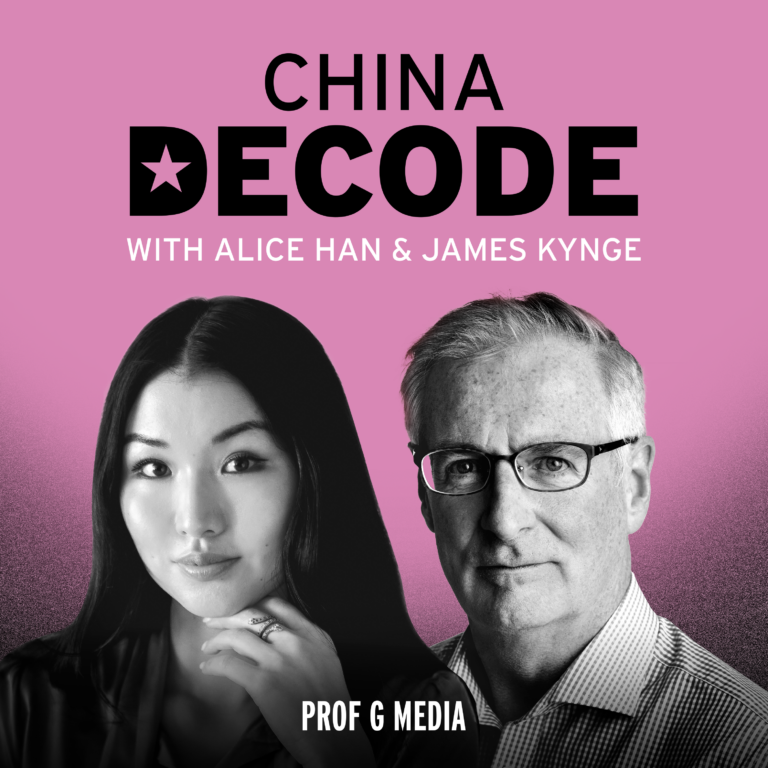
Alice Han and James Kynge look ahead to Trump and Xi’s September 24 meeting in Washington, set against a busy stretch of Xi diplomacy, from the SCO summit to a first-ever trip to India, plus talk of a possible Trump-Putin-Xi trilateral in November. They dig into how trade, rare earths, and soybean purchases are shifting the leverage between the two powers, and whether the fight over AI dominance deserves more attention than the trade deficit.
Then: Ruby Wang, author of China Cure: The Rise of a Biotech, AI Medicine and Global Health Superpower, joins to unpack China’s rapid rise in pharmaceuticals — from faster, cheaper clinical trials to a wave of global licensing deals now worth tens of billions of dollars. She explains what changed since China was a clear follower in the market as recently as 2010, and what it means for U.S. pharma competitiveness.
Subscribe to China Decode on Substack for weekly analysis, livestreams, and deep dives into the biggest story shaping the global economy: chinadecode.profgmedia.com.
Learn more about your ad choices. Visit podcastchoices.com/adchoices

Leave a Reply
You must be logged in to post a comment.