
Summary & Insights





Imagine the first five years of a child’s life not as a time for learning “software” like math or reading, but as the period where the physical “hard drive” of the brain is actually manufactured. If that hardware—the RAM and memory—isn’t built through deep human connection, no amount of later schooling or “software updates” can fully compensate for the missing infrastructure. This is the core philosophy shared by cochlear implant specialist and author Dana Susskind, who argues that the most critical component of early development is the quality of human interaction, not the quantity of information.
The conversation delves into the precarious balance between leveraging technology and maintaining human essence. Susskind warns against “ultra-processed” interaction—AI toys or screens that mimic engagement but lack the messy, imperfect nature of real human relationships. She suggests that the very things parents often try to avoid—friction, mistakes, and social faux pas—are actually the nutrients that allow children to develop resilience and social-emotional intelligence. A child raised in a frictionless, “perfect” environment created by AI is like a seedling grown in a hydroponic lab; it may look healthy, but it will collapse the moment it is transplanted into the unpredictable real world.
Rather than being anti-technology, Susskind advocates for a “HOPE” framework: Human connection as a biological necessity, Owning imperfections, Protecting the early years, and Enhancing (rather than replacing) the parent-child bond. The ultimate goal is to use AI to automate the “shit work” of life—the chores and administrative burdens—to free up parents to be fully present. By using technology to support the parent rather than substitute for them, society can ensure that children develop the “soft skills”—curiosity, moral judgment, and empathy—that will remain uniquely human in an AI-driven economy.
Surprising Insights
- The Hard Drive Analogy: Early childhood (0–5) builds the physical brain hardware; K-12 education is merely a software update. You cannot run “iPhone 16” software on “iPhone 4” hardware.
- The Value of Imperfection: Friction and “good-enough” parenting are essential for a child’s growth. Avoiding all conflict or mistakes via “perfect” AI interactions prevents children from learning how to cope and connect.
- The “Default Trap”: Most users never change factory settings on devices. Tech companies use this behavioral bias to create “infinite loops” (like autoplay videos) that override a child’s natural executive function to stop.
- AI as a Support, Not a Substitute: In cases of struggling parents, the solution isn’t an AI tutor for the child, but AI tools that reduce the parent’s burden (e.g., eliminating the need for a third job) so the parent can be present.
Practical Takeaways
- Audit Your Defaults: Go into your children’s devices and disable “autoplay” or infinite scroll features to help them exercise their own executive function and decision-making.
- Prioritize Presence Over Performance: Stop stressing over “intensive parenting” or perfection. Focus on being present and connected, as the “messiness” of human interaction is where the real learning happens.
- Apply the HOPE Framework: When introducing a new gadget or AI tool, ask: Does this enhance my connection with my child, or does it replace it?
- Use AI for “The Shit Work”: Direct AI technology toward automating household management and chores to maximize the time you spend in face-to-face, high-quality interaction with your children.
Hãy hình dung năm năm đầu đời của một đứa trẻ không phải là thời gian để học những “phần mềm” như toán hay đọc viết, mà là giai đoạn mà “ổ cứng” vật lý của bộ não thực sự được chế tạo. Nếu phần cứng đó—RAM và bộ nhớ—không được xây dựng thông qua sự kết nối sâu sắc giữa người với người, thì không một chương trình học tập hay những bản “cập nhật phần mềm” sau này có thể bù đắp hoàn toàn cho sự thiếu hụt về cơ sở hạ tầng đó. Đây chính là triết lý cốt lõi của Dana Susskind, chuyên gia về cấy ốc tai điện tử kiêm tác giả; bà lập luận rằng thành phần quan trọng nhất của sự phát triển sớm là chất lượng tương tác giữa con người, chứ không phải số lượng thông tin.
Cuộc trò chuyện đi sâu vào sự cân bằng mong manh giữa việc tận dụng công nghệ và duy trì bản chất con người. Susskind cảnh báo về những tương tác “siêu chế biến”—những món đồ chơi AI hoặc màn hình mô phỏng sự gắn kết nhưng thiếu đi bản chất hỗn độn, không hoàn hảo của các mối quan hệ thực sự. Bà cho rằng chính những điều mà cha mẹ thường cố gắng tránh né—như những xung đột, sai lầm và những tình huống khó xử trong giao tiếp—lại chính là “chất dinh dưỡng” cho phép trẻ phát triển khả năng phục hồi và trí tuệ cảm xúc xã hội. Một đứa trẻ lớn lên trong một môi trường “hoàn hảo”, không có ma sát do AI tạo ra cũng giống như một mầm cây được trồng trong phòng thí nghiệm thủy canh; nó có thể trông khỏe mạnh, nhưng sẽ gục ngã ngay khi được cấy vào thế giới thực đầy biến động.
Thay vì phản đối công nghệ, Susskind ủng hộ khung tư duy “HOPE”: Kết nối con người là nhu cầu sinh học (Human connection), Chấp nhận những khiếm khuyết (Owning imperfections), Bảo vệ những năm đầu đời (Protecting the early years), và Tăng cường (thay vì thay thế) mối liên kết giữa cha mẹ và con cái (Enhancing the parent-child bond). Mục tiêu cuối cùng là sử dụng AI để tự động hóa những “việc vặt nhạt nhẽo” của cuộc sống—như dọn dẹp và các gánh nặng hành chính—để cha mẹ có thể toàn tâm toàn ý bên con. Bằng cách sử dụng công nghệ để hỗ trợ cha mẹ thay vì thay thế họ, xã hội có thể đảm bảo trẻ em phát triển được những “kỹ năng mềm”—sự tò mò, khả năng phán đoán đạo đức và sự đồng cảm—những điều sẽ mãi là đặc trưng riêng biệt của con người trong một nền kinh tế vận hành bởi AI.
Những góc nhìn gây ngạc nhiên
- Phép ẩn dụ về Ổ cứng: Giai đoạn thơ ấu (0–5 tuổi) xây dựng phần cứng vật lý của não bộ; giáo dục từ lớp 1 đến 12 chỉ đơn thuần là một bản cập nhật phần mềm. Bạn không thể chạy phần mềm của “iPhone 16” trên phần cứng của “iPhone 4”.
- Giá trị của sự không hoàn hảo: Những xung đột và cách nuôi dạy “vừa đủ tốt” là thiết yếu cho sự phát triển của trẻ. Việc tránh mọi xung đột hoặc sai lầm thông qua các tương tác AI “hoàn hảo” sẽ ngăn cản trẻ học cách đối mặt và kết nối.
- “Bẫy mặc định”: Hầu hết người dùng không bao giờ thay đổi cài đặt mặc định của thiết bị. Các công ty công nghệ lợi dụng thiên kiến hành vi này để tạo ra các “vòng lặp vô tận” (như video tự động phát), điều này ghi đè lên chức năng điều hành tự nhiên của trẻ vốn là biết khi nào nên dừng lại.
- AI là hỗ trợ, không phải thay thế: Đối với những cha mẹ đang gặp khó khăn, giải pháp không phải là một gia sư AI cho đứa trẻ, mà là các công cụ AI giúp giảm bớt gánh nặng cho cha mẹ (ví dụ: loại bỏ nhu cầu phải làm công việc thứ ba) để họ có thời gian hiện diện bên con.
Bài học thực tiễn
- Kiểm tra các cài đặt mặc định: Hãy vào thiết bị của con bạn và tắt tính năng “tự động phát” hoặc cuộn vô tận để giúp trẻ rèn luyện chức năng điều hành và khả năng ra quyết định.
- Ưu tiên sự hiện diện hơn là thành tích: Ngừng áp lực về việc “nuôi dạy con cường độ cao” hay sự hoàn hảo. Hãy tập trung vào việc hiện diện và kết nối, vì chính sự “hỗn độn” trong tương tác giữa con người mới là nơi việc học thực sự diễn ra.
- Áp dụng khung HOPE: Khi giới thiệu một thiết bị hoặc công cụ AI mới, hãy tự hỏi: Điều này giúp tăng cường sự kết nối của tôi với con, hay nó đang thay thế sự kết nối đó?
- Dùng AI cho những “việc vặt”: Hãy hướng công nghệ AI vào việc tự động hóa quản lý gia đình và việc nhà để tối đa hóa thời gian bạn tương tác trực tiếp, chất lượng với con cái.
想像一下,孩子的生命前五年並非學習數學或閱讀等「軟體」的時期,而是大腦物理「硬碟」實際製造的階段。如果這個硬體——也就是隨機存取記憶體(RAM)和記憶體——未能透過深厚的人際連結來建構,那麼後來的學校教育或「軟體更新」無論投入多少,都無法完全補足缺失的基礎設施。這正是人工耳蝸專家兼作家達娜·薩斯金德(Dana Susskind)所共有核心理念:她認為早期發展最關鍵的組成部分是人際互動的「品質」,而非資訊的「數量」。
這場對話深入探討了利用技術與維持人性本質之間的微妙平衡。薩斯金德警告要警惕「超加工」的互動——例如那些模仿參與感但缺乏真實人類關係中那種混亂與不完美特質的 AI 玩具或螢幕。她指出,父母通常試圖避免的事情——如摩擦、錯誤和社交失禮——實際上正是讓孩子培養韌性與社交情緒智能的「養分」。一個在 AI 創造的毫無摩擦且「完美」環境中長大的孩子,就像是在水培實驗室中生長的幼苗;雖然看起來健康,但一旦被移植到不可預測的現實世界,將會立刻崩潰。
薩斯金德並非反對技術,而是倡導一個「HOPE」框架:將人類連結視為生物必然(Human connection)、接納不完美(Owning imperfections)、保護幼年時期(Protecting the early years),以及強化(而非取代)親子紐帶(Enhancing the parent-child bond)。其最終目標是利用 AI 來自動化生活中的「瑣碎雜事」——如家務和行政負擔——從而讓父母能完全地陪伴孩子。透過讓技術支持父母而非取代父母,社會才能確保孩子發展出好奇心、道德判斷力和共情能力等「軟實力」,而這些能力在 AI 驅動的經濟中將依然是人類獨有的特質。
驚人之見
- 硬碟類比法: 幼年期(0-5 歲)是在構建大腦的物理硬體;K-12 教育僅僅是軟體更新。你無法在「iPhone 4」的硬體上運行「iPhone 16」的軟體。
- 不完美的價值: 摩擦與「夠好」的養育方式對孩子的成長至關重要。透過「完美」的 AI 互動來避免所有衝突或錯誤,會阻礙孩子學習如何應對和建立連結。
- 「預設陷阱」: 大多數使用者從不更改設備的工廠設定。科技公司利用這種行為偏差來創建「無限迴路」(如自動播放影片),從而覆蓋孩子停止該行為的自然執行功能。
- AI 是支持而非替代: 對於處境困難的父母,解決方案不是為孩子找一個 AI 導師,而是使用 AI 工具來減輕父母的負擔(例如消除兼職第三份工作的需求),好讓父母能陪伴在孩子身邊。
實踐建議
- 審核你的預設設定: 檢查孩子的設備並禁用「自動播放」或無限捲動功能,幫助他們鍛鍊自身的執行功能與決策能力。
- 陪伴優先於表現: 不要再為「密集育兒」或追求完美而感到壓力。專注於陪伴與連結,因為人際互動中的「混亂」才是真正學習發生的地方。
- 應用 HOPE 框架: 在引入新裝置或 AI 工具時,請自問:這是在強化我與孩子的連結,還是在取代它?
- 利用 AI 處理「瑣事」: 將 AI 技術用於自動化家庭管理和家務,以最大化你與孩子面對面、高品質互動的時間。
Imaginez que les cinq premières années de la vie d’un enfant ne soient pas un moment pour apprendre des « logiciels » comme les mathématiques ou la lecture, mais plutôt la période durant laquelle le « disque dur » physique du cerveau est réellement fabriqué. Si ce matériel — la RAM et la mémoire — n’est pas construit grâce à des connexions humaines profondes, aucune scolarité ultérieure ni aucune « mise à jour logicielle » ne pourra compenser pleinement l’absence d’infrastructure. C’est la philosophie centrale partagée par Dana Susskind, spécialiste des implants cochléaires et auteure, qui soutient que la composante la plus critique du développement précoce est la qualité de l’interaction humaine, et non la quantité d’informations.
La conversation explore l’équilibre précaire entre l’exploitation de la technologie et la préservation de l’essence humaine. Susskind met en garde contre les interactions « ultra-transformées » — les jouets IA ou les écrans qui simulent l’engagement mais sont dépourvus de la nature désordonnée et imparfaite des véritables relations humaines. Elle suggère que les éléments mêmes que les parents tentent souvent d’éviter — les frictions, les erreurs et les faux pas sociaux — sont en réalité les nutriments qui permettent aux enfants de développer leur résilience et leur intelligence socio-émotionnelle. Un enfant élevé dans un environnement « parfait » et sans friction, créé par l’IA, est comme une pousse cultivée dans un laboratoire hydroponique ; elle peut paraître saine, mais elle s’effondrera dès l’instant où elle sera transplantée dans le monde réel et imprévisible.
Loin d’être opposée à la technologie, Susskind préconise un cadre appelé « HOPE » (Espoir) : la connexion humaine comme nécessité biologique (*Human connection*), l’acceptation des imperfections (*Owning imperfections*), la protection des premières années (*Protecting the early years*) et l’amélioration (plutôt que le remplacement) du lien parent-enfant (*Enhancing the bond*). L’objectif ultime est d’utiliser l’IA pour automatiser les « tâches ingrates » de la vie — les corvées et les fardeaux administratifs — afin de libérer les parents pour qu’ils soient pleinement présents. En utilisant la technologie pour soutenir le parent plutôt que pour s’y substituer, la société peut s’assurer que les enfants développent les « soft skills » — la curiosité, le jugement moral et l’empathie — qui resteront uniquely humaines dans une économie pilotée par l’IA.
Idées surprenantes
- L’analogie du disque dur : La petite enfance (0-5 ans) construit le matériel physique du cerveau ; l’éducation primaire et secondaire n’est qu’une mise à jour logicielle. On ne peut pas faire fonctionner le logiciel d’un « iPhone 16 » sur le matériel d’un « iPhone 4 ».
- La valeur de l’imperfection : Les frictions et un mode parental « suffisant » sont essentiels à la croissance de l’enfant. Éviter tout conflit ou toute erreur via des interactions IA « parfaites » empêche les enfants d’apprendre à faire face et à créer des liens.
- Le « piège du défaut » : La plupart des utilisateurs ne modifient jamais les paramètres d’usine de leurs appareils. Les entreprises technologiques utilisent ce biais comportemental pour créer des « boucles infinies » (comme la lecture automatique des vidéos) qui court-circuitent la fonction exécutive naturelle de l’enfant, celle qui lui permet de s’arrêter.
- L’IA comme support, et non substitut : Dans le cas de parents en difficulté, la solution n’est pas un tuteur IA pour l’enfant, mais des outils d’IA qui réduisent la charge du parent (par exemple, en éliminant le besoin d’un troisième emploi) afin que celui-ci puisse être présent.
Conseils pratiques
- Auditez vos paramètres par défaut : Allez dans les appareils de vos enfants et désactivez la « lecture automatique » ou le défilement infini pour les aider à exercer leur propre fonction exécutive et leur capacité de décision.
- Privilégiez la présence à la performance : Cessez de stresser pour une « parentalité intensive » ou la perfection. Concentrez-vous sur le fait d’être présent et connecté, car c’est dans le « désordre » de l’interaction humaine que se produit le véritable apprentissage.
- Appliquez le cadre HOPE : Lors de l’introduction d’un nouveau gadget ou d’un outil d’IA, demandez-vous : « Est-ce que cela améliore mon lien avec mon enfant, ou est-ce que cela le remplace ? »
- Utilisez l’IA pour les « tâches ingrates » : Orientez la technologie IA vers l’automatisation de la gestion domestique et des corvées pour maximiser le temps que vous passez en interaction directe et de qualité avec vos enfants.
Stellen Sie sich die ersten fünf Lebensjahre eines Kindes nicht als eine Zeit zum Erlernen von „Software“ wie Mathematik oder Lesen vor, sondern als die Phase, in der die physische „Festplatte“ des Gehirns tatsächlich hergestellt wird. Wenn diese Hardware – der Arbeitsspeicher und das Gedächtnis – nicht durch tiefe menschliche Bindungen aufgebaut wird, kann keine spätere Beschulung oder kein „Software-Update“ die fehlende Infrastruktur vollständig kompensieren. Dies ist die Kernphilosophie der Cochlea-Implantat-Spezialistin und Autorin Dana Susskind, die argumentiert, dass die wichtigste Komponente der frühen Entwicklung die Qualität der menschlichen Interaktion ist, nicht die Quantität der Informationen.
Das Gespräch befasst sich mit dem prekären Gleichgewicht zwischen dem Nutzen von Technologie und dem Bewahren des menschlichen Wesenskerns. Susskind warnt vor „hochverarbeiteten“ Interaktionen – KI-Spielzeugen oder Bildschirmen, die Engagement imitieren, aber der chaotischen, unvollkommenen Natur echter menschlicher Beziehungen entbehren. Sie legt nahe, dass genau die Dinge, die Eltern oft zu vermeiden versuchen – Reibungen, Fehler und soziale Fauxpas –, tatsächlich die Nährstoffe sind, die es Kindern ermöglichen, Resilienz und sozial-emotionale Intelligenz zu entwickeln. Ein Kind, das in einer reibungslosen, „perfekten“ KI-gesteuerten Umgebung aufwächst, ist wie ein Setzling in einem Hydrokultur-Labor: Es mag gesund aussehen, wird aber in dem Moment zusammenbrechen, in dem es in die unvorhersehbare reale Welt transplantiert wird.
Anstatt technikfeindlich zu sein, plädiert Susskind für ein „HOPE“-Framework: Menschliche Verbindung als biologische Notwendigkeit (Human connection), Akzeptanz von Unvollkommenheiten (Owning imperfections), Schutz der frühen Jahre (Protecting the early years) und die Erweiterung – statt Ersetzung – der Eltern-Kind-Bindung (Enhancing the bond). Das ultimative Ziel ist es, KI zu nutzen, um die „Drecksarbeit“ des Lebens – die Hausarbeit und administrativen Lasten – zu automatisieren, damit Eltern wieder die Freiheit haben, voll und ganz präsent zu sein. Indem Technologie dazu genutzt wird, die Eltern zu unterstützen statt sie zu ersetzen, kann die Gesellschaft sicherstellen, dass Kinder jene „Soft Skills“ entwickeln – Neugier, moralisches Urteilsvermögen und Empathie –, die in einer KI-gesteuerten Wirtschaft einzigartig menschlich bleiben werden.
Überraschende Erkenntnisse
- Die Festplatten-Analogie: Die frühe Kindheit (0–5 Jahre) baut die physische Gehirnhardware auf; die Schulbildung von der ersten bis zur zwölften Klasse ist lediglich ein Software-Update. Man kann keine „iPhone 16“-Software auf einer „iPhone 4“-Hardware ausführen.
- Der Wert der Unvollkommenheit: Reibungen und ein „gut genug“ Elternstil sind essenziell für das Wachstum eines Kindes. Das Vermeiden aller Konflikte oder Fehler durch „perfekte“ KI-Interaktionen hindert Kinder daran, zu lernen, wie man mit Schwierigkeiten umgeht und wie man Bindungen aufbaut.
- Die „Default-Falle“: Die meisten Nutzer ändern niemals die Werkseinstellungen ihrer Geräte. Tech-Unternehmen nutzen diese Verhaltenstendenz, um „Endlosschleifen“ (wie Autoplay-Videos) zu kreieren, welche die natürliche Exekutivfunktion eines Kindes, aufzuhören, außer Kraft setzen.
- KI als Unterstützung, nicht als Ersatz: Bei überforderten Eltern ist die Lösung nicht ein KI-Tutor für das Kind, sondern KI-Werkzeuge, die die Last der Eltern reduzieren (z. B. durch den Wegfall eines Nebenjobs), damit die Eltern präsent sein können.
Praktische Tipps
- Überprüfen Sie Ihre Standardeinstellungen: Gehen Sie in die Einstellungen der Geräte Ihrer Kinder und deaktivieren Sie „Autoplay“ oder Infinite-Scroll-Funktionen, um ihnen zu helfen, ihre eigene Exekutivfunktion und Entscheidungsfähigkeit zu trainieren.
- Präsenz vor Perfektion: Hören Sie auf, sich wegen „intensive parenting“ oder Perfektion zu stressen. Konzentrieren Sie sich darauf, präsent und verbunden zu sein, denn in der „Unordnung“ menschlicher Interaktion findet das eigentliche Lernen statt.
- Wenden Sie das HOPE-Framework an: Fragen Sie sich bei der Einführung eines neuen Gadgets oder KI-Tools: erweitert dies meine Verbindung zu meinem Kind oder ersetzt es diese?
- Nutzen Sie KI für die „Drecksarbeit“: Richten Sie die KI-Technologie darauf aus, das Haushaltsmanagement und Routineaufgaben zu automatisieren, um die Zeit zu maximieren, die Sie in einer persönlichen, qualitativ hochwertigen Interaktion mit Ihren Kindern verbringen.
Artificial intelligence has taken the world by storm. But despite the hype around personalized avatars or podcast language translation, artificial intelligence is not only impacting the creative spheres; in fact it’s hard to find an industry that isn’t being touched by this technology – and defense of our country is far from excluded.
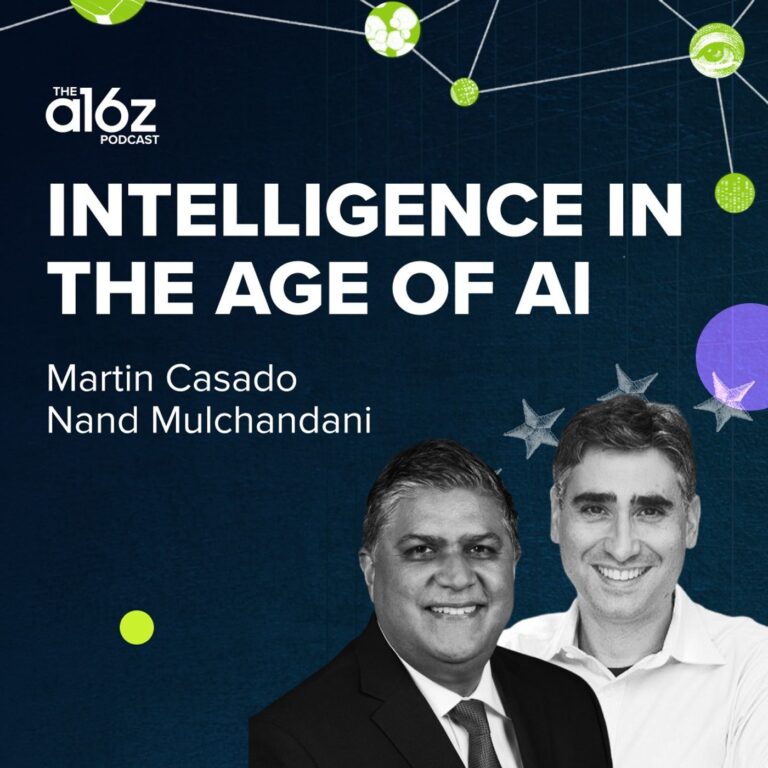
In this episode, originally recorded in the heart of Washington DC this January during a16z’s American Dynamism Summit, a16z General Partner Martin Casado and a16z enterprise editor, Derrick Harris are joined by the first-ever CTO of the CIA, Nand Mulchandani.
In this wide-ranging conversation, they discuss the evolving relationship between analysts and AI, how governments can keep up with this exponential technology, and finally, how it’s impacting both offense and defense.
This episode is essential listening for anyone interested in the intersection of technology, national security, and policy-making in the age of artificial intelligence. Stay tuned for more exclusive conversations from a16z’s second annual American Dynamism Summit in Washington DC.
Topics Covered:
00:00 – Intelligence in the Age of AI
02:28 – Rethinking Jobs and AI’s Asymmetric Power
05:00 – The History of AI in the Intelligence Community
07:00 – Operational Utilization of AI
10:40 – Analytic Capabilities and Uncertainty
12:56 – AI’s ‘Hallucination’ Concerns
16:37 – Analyst Skill Sets and AI Tools
26:29 – Supply Chain and Open Source
31:35 – Public-Private Partnerships
41:33 – Government as a Customer and Partner in Tech
42:43 – Policy, Technology, and Regulation
Resources
Learn more about AD Summit 2024: www.a16z.com/adsummit
Watch all of the stage talks at AD Summit 2024: https://www.youtube.com/playlist?list=PLM4u6XbiXf5pAKmk1AeZ9964KGScf4lHM
Read the CIA’s announcement around the new CTO role: https://www.cia.gov/stories/story/cia-names-first-chief-technology-officer/
Find Nand Mulchandani on Twitter: https://twitter.com/nandmulchandani
Find Martin on Twitter: https://twitter.com/martin_casado
Find Derrick on Twitter: https://twitter.com/derrickharris
Stay Updated:
Find a16z on Twitter: https://twitter.com/a16z
Find a16z on LinkedIn: https://www.linkedin.com/company/a16z
Subscribe on your favorite podcast app: https://a16z.simplecast.com/
Follow our host: https://twitter.com/stephsmithio
Please note that the content here is for informational purposes only; should NOT be taken as legal, business, tax, or investment advice or be used to evaluate any investment or security; and is not directed at any investors or potential investors in any a16z fund. a16z and its affiliates may maintain investments in the companies discussed. For more details please see a16z.com/disclosures.
Leave a Reply
You must be logged in to post a comment.