
0
0
Summary & Insights

To manifest the future you want requires more than wishing—it demands action. That stark truth anchors a conversation between Guy Kawasaki and Brian Solis, the head of global innovation at ServiceNow, who unpacks why most people remain trapped in reactive cycles while the real magic happens in the leap from dreaming to doing. Solis defines a “mind shift” not as a simple mindset tweak but as a proactive practice of reshaping tomorrow before it shapes you. He contrasts this with “growth mindset” concepts, emphasizing that true mind shifts require scanning for emerging signals, not just adapting to current demands. Using Apple’s iPhone development as an example—even Steve Jobs needed external persuasion to see the smartphone’s potential—Solis argues that this ability to imagine and build new futures isn’t reserved for visionaries alone. It’s a skill anyone can cultivate by shifting focus from “doing yesterday better” to “unlocking what was previously impossible.”

The conversation pivots sharply on the distinction between automation and augmentation when it comes to AI. Solis explains that while 95% of companies miss the ROI of AI by merely automating existing workflows (like using AI to analyze X-rays more efficiently), the real breakthrough lies in augmentation—using AI as a “cognitive exoskeleton” to create capabilities that never existed before. McKinsey research shows reimagining end-to-end enterprise workflows is the top driver of AI success, not incremental efficiency gains. This shift requires asking fundamentally new questions: What could we not achieve without this technology? Solis ties this to cultural psychology, stressing that psychological safety must precede innovation. Teams need to feel safe challenging norms before they can explore exponential possibilities. He also reveals how storytelling fails when it centers the company as the hero; instead, the audience must see themselves as the protagonist in the story—inspired by Pixar’s story spine method where the hero’s journey is about the customer’s transformation, not the product.

Underpinning all this is a sobering reality: self-awareness is the rarest and most critical ingredient for a mind shift. A study cited in the discussion reveals that while 100% of people believe they’re self-aware, only 10% actually are. This gap explains why even well-intentioned leaders miss opportunities—they’re stuck in “perpetuation” (the status quo) instead of “possibility.” Solis describes this tension as the difference between clinging to familiar rhythms and embracing the uncomfortable act of shaping the future. For those in rigid organizations, he admits there are times when walking away is wiser than fighting for change—mental health must be prioritized. But for those committed to shifting mindsets, the path starts with small, reflective actions: auditing daily habits, reframing narratives around others’ needs, and courageously asking the questions that uncover invisible barriers.

Surprising Insights

  • Only 10% of people are genuinely self-aware, despite nearly everyone believing they are—this creates blind spots that prevent proactive future-shaping.
  • The #1 factor for AI ROI isn’t cost-cutting but reimagining entire enterprise workflows end-to-end; McKinsey found this drives more value than any other AI application.
  • Even iconic innovators like Steve Jobs required external input to embrace the iPhone’s potential, proving that mind shifts often need collaboration, not just individual genius.
  • The phrase “possibility vs perpetuation” better captures organizational change struggles than “change management”—it reframes inertia as a conscious choice rather than an inevitability.
  • AI functions as a “cognitive exoskeleton” (a term from Marshall Kirkpatrick), enhancing human capabilities rather than replacing them—like Bishop in Alien using an exoskeleton to lift what’s impossible alone.

Practical Takeaways

  • Audit your weekly activities: Compare where your time is spent versus where it should be to build your desired future. Many people are stuck in “swirl” (urgent but unimportant tasks) instead of strategic growth.
  • When introducing new technology, start with this question: “What could we not do before this exists?” before asking “how do we do this faster/better?”—this shifts focus from automation to augmentation.
  • Reframe storytelling: Make your audience (customers, team members, or stakeholders) the hero of the narrative. Your product or company is merely the tool that helps them achieve their goals, as Pixar teaches in its story spine method.
  • Before pushing innovation, build psychological safety in your team. Ask: “Can people challenge ideas without fear of repercussions?”—this is foundational for exploring exponential opportunities.
  • Treat augmentation investments like a diversified portfolio: Focus on small, low-risk experiments that could yield massive returns, rather than all-or-nothing bets. This makes uncertainty feel tangible and manageable.

Pour réaliser l’avenir que vous souhaitez, il ne suffit pas de le rêver – cela exige des actions. Cette vérité éclatante constitue le fondement d’un échange entre Guy Kawasaki et Brian Solis, responsable de l’innovation mondiale chez ServiceNow, qui décrypte pourquoi la plupart des gens restent coincés dans des cycles réactifs, alors que la véritable magie s’opère dans le passage du rêve à l’action. Solis définit un « changement de mentalité » non pas comme un simple ajustement, mais comme une pratique proactive de façonner demain avant qu’il ne vous façonne. Il contraste cette notion avec les concepts de « mentalité de croissance », soulignant qu’un véritable changement de mentalité nécessite de détecter des signaux émergents, et non pas simplement de s’adapter aux demandes actuelles. En prenant le développement de l’iPhone d’Apple comme exemple – Steve Jobs a eu besoin d’une persuasion externe pour percevoir le potentiel du smartphone –, Solis affirme que cette capacité à imaginer et construire de nouveaux futurs n’est pas réservée aux visionnaires. C’est une compétence que chacun peut cultiver en passant de « faire mieux hier » à « débloquer l’impossible ».


La conversation se recentre brusquement sur la distinction entre automatisation et augmentation dans le domaine de l’IA. Solis explique que si 95 % des entreprises échouent à tirer profit de l’IA en se contentant d’automatiser des flux de travail existants (comme utiliser l’IA pour analyser des radiographies plus efficacement), le véritable progrès réside dans l’augmentation – utiliser l’IA comme un « exosquelette cognitif » pour créer des capacités qui n’existaient pas auparavant. Selon McKinsey, la réinvention complète des flux de travail d’entreprise de bout en bout est le principal moteur de réussite de l’IA, bien plus que les améliorations d’efficacité progressives. Ce changement impose de se poser des questions fondamentalement nouvelles : Qu’avons-nous été incapables de réaliser sans cette technologie ? Solis relie cela à la psychologie culturelle, soulignant que la sécurité psychologique doit précéder l’innovation. Les équipes doivent se sentir en sécurité pour remettre en question les normes avant de pouvoir explorer des possibilités exponentielles. Il révèle également que les récits échouent lorsqu’ils placent l’entreprise au centre du héros ; au contraire, le public doit se voir comme protagoniste de l’histoire – inspiré par la méthode « story spine » de Pixar, où le parcours du héros concerne la transformation du client, non du produit.


Sous-tendant tout cela se trouve une réalité dérangeante : la conscience de soi est l’ingrédient le plus rare et essentiel pour un changement de mentalité. Une étude citée montre que si 100 % des personnes affirment être conscientes d’elles-mêmes, seuls 10 % le sont réellement. Cette lacune explique pourquoi même les dirigeants bien intentionnés manquent des opportunités : ils restent coincés dans la « perpétuation » (le statu quo) au lieu de la « possibilité ». Solis décrit cette tension comme la différence entre s’accrocher à des rythmes familiers et accepter l’acte inconfortable de façonnager l’avenir. Pour ceux qui travaillent dans des organisations rigides, il admet qu’il arrive parfois qu’être en retrait soit plus sage que de se battre pour le changement – la santé mentale doit être priorisée. Mais pour ceux déterminés à faire évoluer leur mentalité, le chemin commence par des actions réfléchies et modestes : analyser ses habitudes quotidiennes, reformuler les récits autour des besoins des autres, et poser courageusement les questions qui révèlent des obstacles invisibles.


Observations surprenantes


  • Seuls 10 % des gens sont véritablement conscients d’eux-mêmes, alors que la quasi-totalité le pense – cela engendre des points aveugles empêchant la façonne proactive de l’avenir.

  • Le facteur #1 pour le ROI de l’IA n’est pas la réduction de coûts, mais la réinvention intégrale des flux de travail d’entreprise de bout en bout : McKinsey a constaté que cela génère plus de valeur que toute autre application d’IA.

  • Même des innovateurs emblématiques comme Steve Jobs ont eu besoin d’un apport externe pour saisir le potentiel de l’iPhone, prouvant que les changements de mentalité exigent souvent une collaboration, et non pas seulement un génie individuel.

  • L’expression « possibilité vs perpétuation » décrit mieux les défis du changement organisationnel que « gestion du changement » – elle reframe l’inertie en un choix délibéré plutôt qu’en une fatalité.

  • L’IA fonctionne comme un « exosquelette cognitif » (terme de Marshall Kirkpatrick), améliorant les capacités humaines plutôt que de les remplacer – comme Bishop dans Alien utilisant un exosquelette pour soulever une charge impossible seul.


Conseils concrets


  • Auditez vos activités hebdomadaires : comparez où vous passez votre temps versus où vous devriez le passer pour construire l’avenir souhaité. Beaucoup de personnes restent coincées dans le « swirl » (tâches urgentes mais non importantes) au lieu de privilégier une croissance stratégique.

  • En introduisant une nouvelle technologie, posez d’abord cette question : « Qu’est-ce que nous ne pouvions pas faire avant sa présence ? » avant de demander « Comment le faire plus vite ou mieux ? » – cela déplace le focus de l’automatisation vers l’augmentation.

  • Reformulez vos récits : faites de votre public (clients, membres d’équipe ou parties prenantes) le héros. Votre produit ou entreprise n’est qu’un outil au service de leurs objectifs, comme le montre la méthode « story spine » de Pixar.

  • Avant de pousser l’innovation, établissez une sécurité psychologique au sein de votre équipe en vous posant : « Les membres peuvent-ils remettre en question des idées sans crainte de représailles ? » – c’est la base pour explorer des opportunités exponentielles.

  • Traitez les investissements en augmentation comme un portefeuille diversifié : concentrez-vous sur des petites expériences à faible risque pouvant générer des retours massifs, plutôt que sur des paris tout ou rien. Cela rend l’incertitude tangible et gérable.


Die Manifestation deiner gewünschten Zukunft erfordert mehr als bloßes Wünschen – sie verlangt Handeln. Diese deutliche Wahrheit ist das Fundament eines Gesprächs zwischen Guy Kawasaki und Brian Solis, Leiter der globalen Innovation bei ServiceNow, der erläutert, warum die meisten Menschen in reaktiven Zyklen gefangen bleiben, während der wahre Zauber im Sprung vom Träumen zum Tun liegt. Solis definiert einen „Mindset-Shift“ nicht als einfache Anpassung des Mindsets, sondern als proaktive Praxis, die Zukunft neu zu formen, bevor sie dich formt. Er setzt dies im Kontrast zu „Wachstumsmindset“-Konzepten und betont, dass echte Mindset-Shifts das Erkennen von aufkommenden Signalen erfordern, nicht nur die Anpassung an aktuelle Anforderungen. Anhand der Entwicklung des iPhone durch Apple – sogar Steve Jobs brauchte externe Überzeugung, um das Potenzial des Smartphones zu erkennen – argumentiert Solis, dass diese Fähigkeit, neue Zukunftsvisionen zu erdenken und zu gestalten, nicht nur Visionären vorbehalten ist. Es ist eine Fähigkeit, die jeder entwickeln kann, indem er den Fokus von „gestern besser machen“ auf „das zuvor Unmögliche freisetzen“ verschiebt.


Die Unterhaltung konzentriert sich scharf auf den Unterschied zwischen Automatisierung und Augmentation im Bereich KI. Solis erklärt, dass 95 % der Unternehmen den ROI von KI verfehlen, indem sie lediglich bestehende Arbeitsabläufe automatisieren (wie die effizientere Röntgenanalyse mit KI), während der eigentliche Durchbruch in der Augmentation liegt – dem Einsatz von KI als „kognitives Exoskelett“, um Fähigkeiten zu schaffen, die es zuvor nicht gab. McKinsey-Studien zeigen, dass das Neudenken ganzheitlicher Unternehmensprozesse von Anfang bis Ende der Haupttreiber für KI-Erfolg ist, nicht schrittweise Effizienzsteigerungen. Dieser Wandel erfordert grundlegend neue Fragen: Was konnten wir ohne diese Technologie nicht erreichen? Solis verbindet dies mit kultureller Psychologie und betont, dass psychologische Sicherheit Voraussetzung für Innovation ist. Teams müssen sich sicher fühlen, Normen in Frage zu stellen, bevor sie exponentielle Möglichkeiten erkunden können. Zudem zeigt er, wie storytelling scheitert, wenn das Unternehmen im Mittelpunkt steht; stattdessen muss das Publikum sich als Protagonist der Geschichte sehen – inspiriert von Pixars Story-Spine-Methode, bei der die Heldentour um die Transformation des Kunden geht, nicht um das Produkt.


Dem zugrunde liegt eine nüchterne Realität: Selbsterkenntnis ist die seltenste und kritischste Zutat für einen Mindset-Shift. Eine zitierte Studie zeigt, dass obwohl 100 % der Menschen glauben, Selbsterkenntnis zu haben, nur 10 % sie tatsächlich besitzen. Diese Kluft erklärt, warum selbst gut gemeinte Führungskräfte Chancen verpassen – sie stecken im „Status Quo“ statt in den „Möglichkeiten“. Solis beschreibt diese Spannung als den Unterschied zwischen dem Festhalten an vertrauten Rhythmen und dem unangenehmen Akt, die Zukunft zu gestalten. Für diejenigen in starren Organisationen gibt es Zeiten, in denen Weggehen klüger ist als der Kampf für Veränderung – psychische Gesundheit muss Priorität haben. Doch für diejenigen, die an der Veränderung ihrer Denkweise festhalten, beginnt der Weg mit kleinen, reflexiven Aktionen: Überprüfung täglicher Gewohnheiten, Neubewertung von Erzählungen in Bezug auf die Bedürfnisse anderer und mutigem Stellen von Fragen, die unsichtbare Barrieren aufdecken.


Überraschende Einsichten


  • Nur 10 % der Menschen besitzen wirklich Selbsterkenntnis, obwohl fast alle glauben, sie zu haben – dies schafft Blindspots, die proaktives Zukunftsgestalten verhindern.

  • Der wichtigste Faktor für den KI-ROI ist nicht Kostensenkung, sondern das Neudenken ganzheitlicher Unternehmensprozesse von Anfang bis Ende; McKinsey bestätigt, dass dies mehr Wert schafft als jede andere KI-Anwendung.

  • Selbst ikonische Innovatoren wie Steve Jobs brauchten externe Impulse, um das Potenzial des iPhone zu erkennen – dies beweist, dass Mindset-Shifts oft Zusammenarbeit erfordern, nicht nur individuelle Genialität.

  • Die Phrase „Möglichkeit vs. Perpetuierung“ beschreibt Organisationsveränderungen besser als „Change Management“ – sie interpretiert Trägheit als bewusste Entscheidung statt als Unausweichlichkeit.

  • KI fungiert als „kognitives Exoskelett“ (ein Begriff von Marshall Kirkpatrick) und stärkt menschliche Fähigkeiten statt sie zu ersetzen – wie Bishop in Alien, der mit einem Exoskelett Dinge hebt, die allein unmöglich sind.


Praktische Erkenntnisse


  • Überprüfe deine wöchentlichen Aktivitäten: Vergleiche, wo du deine Zeit verbringst, mit dem, wo sie sein sollte, um die gewünschte Zukunft aufzubauen. Viele Menschen stecken im „Swirl“ (dringende, aber unwichtige Aufgaben) statt im strategischen Wachstum.

  • Beim Einführen neuer Technologien stelle zuerst diese Frage: „Was konnten wir ohne diese Technologie nicht tun?“ bevor du „Wie können wir dies schneller/besser machen?“ fragst – dadurch verschiebst du den Fokus von Automatisierung auf Augmentation.

  • Erzähle anders: Mache dein Publikum (Kunden, Teammitglieder oder Stakeholder) zum Helden der Geschichte. Dein Produkt oder Unternehmen ist lediglich das Werkzeug, das ihnen hilft, ihre Ziele zu erreichen – so lehrt es Pixars Story-Spine-Methode.

  • Bevor du Innovationen vorantreibst, baue psychologische Sicherheit in deinem Team auf. Stelle die Frage: „Können Teammitglieder Ideen in Frage stellen, ohne Repressalien zu befürchten?“ – dies ist grundlegend für das Erforschen exponentieller Chancen.

  • Behandle Augmentation-Investitionen wie ein diversifiziertes Portfolio: Konzentriere dich auf kleine, risikoarme Experimente mit hohem Renditepotenzial statt auf Alles-oder-Nichts-Wetten. Dadurch wird Unsicherheit greifbar und handhabbar.


What does it really take to see the future before it arrives?

Guy Kawasaki sits down with Brian Solis, author of Mindshift, to unpack how leaders can stop reacting and start shaping what’s next. They explore the difference between automation and augmentation, why most organizations fail to realize AI’s potential, and how storytelling fuels real transformation. Brian shares practical frameworks for breaking out of “business as usual” and building movements that create change. If you want to stop playing catch-up with the future, this conversation is your wake-up call.

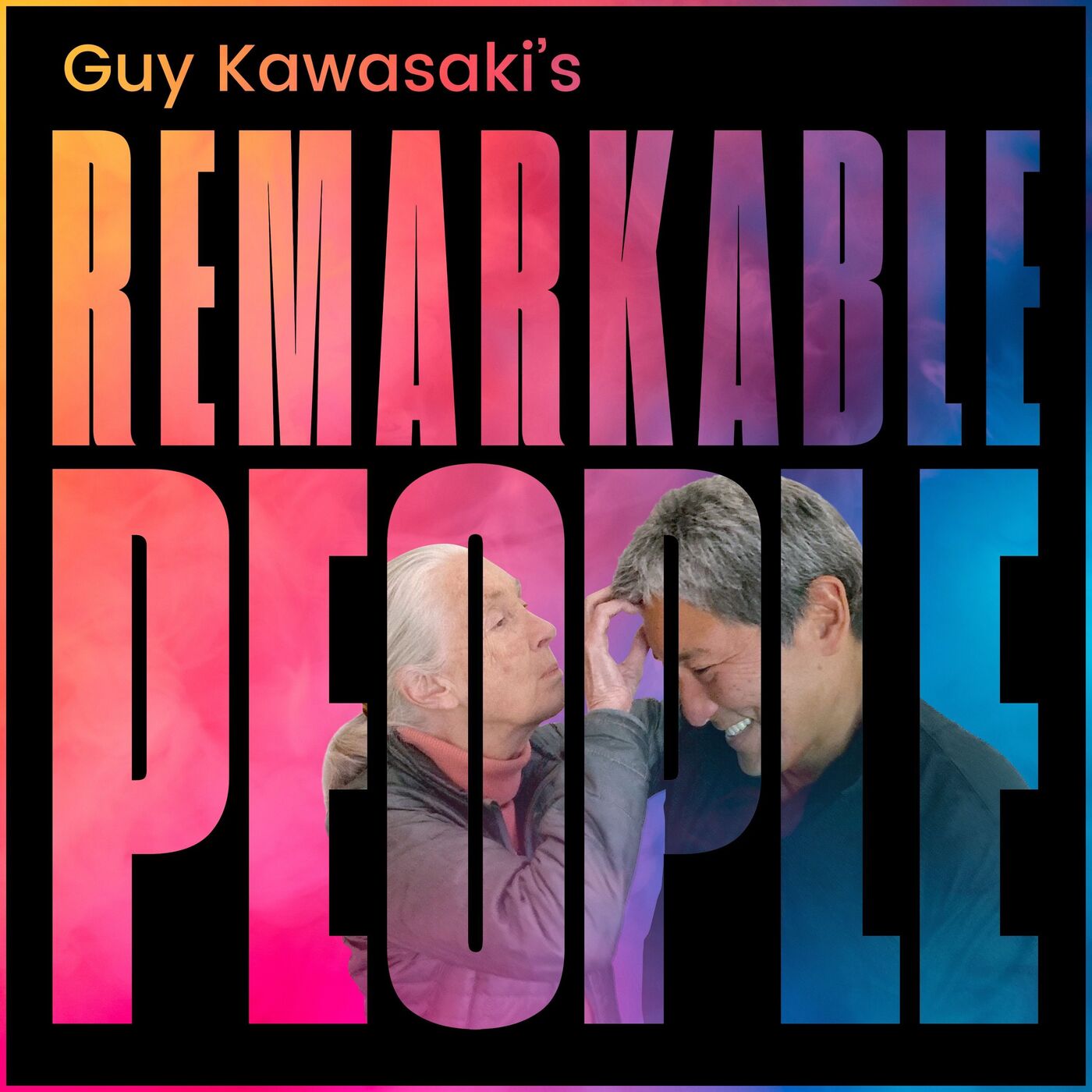
Guy Kawasaki is on a mission to make you remarkable. His Remarkable People podcast features interviews with remarkable people such as Jane Goodall, Marc Benioff, Woz, Kristi Yamaguchi, and Bob Cialdini. Every episode will make you more remarkable.

With his decades of experience in Silicon Valley as a Venture Capitalist and advisor to the top entrepreneurs in the world, Guy’s questions come from a place of curiosity and passion for technology, start-ups, entrepreneurship, and marketing. If you love society and culture, documentaries, and business podcasts, take a second to follow Remarkable People.

Listeners of the Remarkable People podcast will learn from some of the most successful people in the world with practical tips and inspiring stories that will help you be more remarkable.

Episodes of Remarkable People organized by topic: https://bit.ly/rptopology

Listen to Remarkable People here: **https://podcasts.apple.com/us/podcast/guy-kawasakis-remarkable-people/id1483081827**

See Privacy Policy at https://art19.com/privacy and California Privacy Notice at https://art19.com/privacy#do-not-sell-my-info.

Guy Kawasaki's Remarkable PeopleGuy Kawasaki's Remarkable People
Let's Evolve Together
Logo