

Summary & Insights





Could a system survive if its participants were not just failing, but actively trying to corrupt it? This question lies at the heart of Byzantine Fault Tolerance (BFT), a decades-old computer science problem that many experts in 2007 dismissed as impractical and too slow for real-world use. However, the emergence of Bitcoin fundamentally shifted this perspective by proving that solving “Byzantine agreements” was the essential technical hurdle for creating a decentralized ledger.
The conversation reveals that Bitcoin didn’t appear in a vacuum; rather, it was a revolutionary application of distributed computing research from the 80s and 90s. While early academic protocols were often too rigid or inefficient for global scale, Satoshi Nakamoto integrated economics and cryptography to make BFT viable in a permissionless setting. This sparked a long-term convergence between theoretical computer science and blockchain engineering, moving from the energy-intensive Proof of Work to more sophisticated Proof of Stake systems that leverage the foundational work of pioneers like Leslie Lamport and Barbara Liskoff.
Modern blockchain design has now evolved into a pursuit of “wartime” and “peacetime” efficiency. Engineers are building dual-mode protocols that prioritize extreme speed and low latency during normal operation (peacetime) but can instantly pivot to a robust, slower security mode (wartime) if the network is attacked. This synergy between abstract mathematical proofs and production-ready code has turned BFT from a theoretical curiosity into the “table stakes” for any scalable financial infrastructure.
Surprising Insights
- The “Impracticality” Myth: As recently as 2007, leading researchers at workshops argued that BFT was unnecessary and too performance-heavy to be useful, yet it is now the backbone of almost every major blockchain.
- The Delayed Realization: It took several years after Bitcoin’s launch for the broader research community to realize that Nakamoto had actually solved a classic, 40-year-old academic problem known as the Byzantine agreement.
- Convergence via Proof of Stake: The transition from Proof of Work to Proof of Stake wasn’t just about the environment; it was the technical unlock that allowed classical BFT research (like those of Lamport and Liskoff) to be applied to blockchains.
- Theory as a Practical Tool: High-level mathematical abstractions and formal proofs are no longer just for academics; they are now used as standard engineering requirements to ensure the security of billions of dollars in assets.
Practical Takeaways
- Design for Two Modes: When building resilient systems, implement a “peacetime” path for maximum performance and a “wartime” path for maximum security. This allows you to optimize for the common case without sacrificing safety during a crisis.
- Look to First Principles: When facing a seemingly “impossible” technical hurdle, research existing academic literature from parallel fields. The “innovation” often lies in applying an old theoretical solution to a new practical context.
- Prioritize Latency vs. Throughput: Distinguish between how much data a system can handle (throughput) and how fast a single transaction is confirmed (latency) to identify exactly where a protocol needs optimization.
Liệu một hệ thống có thể tồn tại nếu những người tham gia không chỉ gặp lỗi, mà còn chủ động tìm cách phá hoại nó? Câu hỏi này chính là cốt lõi của khả năng Chịu lỗi Byzantine (Byzantine Fault Tolerance – BFT), một bài toán khoa học máy tính có từ nhiều thập kỷ trước mà nhiều chuyên gia vào năm 2007 từng gạt bỏ vì cho rằng nó không thực tế và quá chậm để ứng dụng trong đời thực. Tuy nhiên, sự ra đời của Bitcoin đã thay đổi căn bản góc nhìn này bằng cách chứng minh rằng việc giải quyết “đồng thuận Byzantine” là rào cản kỹ thuật thiết yếu để tạo ra một sổ cái phi tập trung.
Cuộc thảo luận cho thấy Bitcoin không xuất hiện một cách ngẫu nhiên; thay vào đó, nó là một ứng dụng mang tính cách mạng từ các nghiên cứu về tính toán phân tán trong những năm 80 và 90. Trong khi các giao thức học thuật thời kỳ đầu thường quá cứng nhắc hoặc kém hiệu quả để triển khai ở quy mô toàn cầu, Satoshi Nakamoto đã tích hợp kinh tế học và mật mã học để khiến BFT trở nên khả thi trong một môi trường không cần cấp quyền (permissionless). Điều này đã thúc đẩy sự hội tụ dài hạn giữa khoa học máy tính lý thuyết và kỹ thuật blockchain, chuyển dịch từ cơ chế Proof of Work (Bằng chứng Công việc) tiêu tốn năng lượng sang các hệ thống Proof of Stake (Bằng chứng Cổ phần) tinh vi hơn, vốn kế thừa những công trình nền tảng của các tiên phong như Leslie Lamport và Barbara Liskoff.
Thiết kế blockchain hiện đại giờ đây đã tiến hóa thành cuộc theo đuổi hiệu suất trong “thời bình” và “thời chiến”. Các kỹ sư đang xây dựng các giao thức chế độ kép, ưu tiên tốc độ cực cao và độ trễ thấp trong điều kiện vận hành bình thường (thời bình), nhưng có thể lập tức chuyển sang chế độ bảo mật chậm hơn nhưng vững chắc hơn (thời chiến) nếu mạng lưới bị tấn công. Sự hiệp lực giữa các chứng minh toán học trừu tượng và mã nguồn sẵn sàng cho sản xuất đã biến BFT từ một điều kỳ thú mang tính lý thuyết thành “điều kiện tiên quyết” cho bất kỳ cơ sở hạ tầng tài chính có khả năng mở rộng nào.
Những góc nhìn bất ngờ
- Huyền thoại về “Sự không thực tế”: Mới chỉ vào năm 2007, các nhà nghiên cứu hàng đầu tại các hội thảo vẫn lập luận rằng BFT là không cần thiết và quá nặng nề về hiệu suất để có thể hữu ích, thế nhưng giờ đây nó lại là xương sống của hầu hết mọi blockchain lớn.
- Sự nhận thức chậm trễ: Phải mất vài năm sau khi Bitcoin ra mắt, cộng đồng nghiên cứu rộng lớn mới nhận ra rằng Nakamoto thực chất đã giải quyết một bài toán học thuật kinh điển 40 năm tuổi được gọi là đồng thuận Byzantine.
- Sự hội tụ thông qua Proof of Stake: Việc chuyển đổi từ Proof of Work sang Proof of Stake không chỉ vì vấn đề môi trường; đó là “chìa khóa” kỹ thuật cho phép áp dụng các nghiên cứu BFT cổ điển (như của Lamport và Liskoff) vào blockchain.
- Lý thuyết như một công cụ thực hành: Các trừu tượng toán học cấp cao và chứng minh hình thức không còn chỉ dành cho các học giả; giờ đây chúng được sử dụng như những yêu cầu kỹ thuật tiêu chuẩn để đảm bảo an toàn cho khối tài sản trị giá hàng tỷ đô la.
Bài học thực tiễn
- Thiết kế cho hai chế độ: Khi xây dựng các hệ thống có khả năng phục hồi, hãy triển khai một lộ trình “thời bình” để đạt hiệu suất tối đa và một lộ trình “thời chiến” để đạt bảo mật tối đa. Điều này cho phép bạn tối ưu hóa cho các trường hợp thông thường mà không đánh đổi sự an toàn khi có khủng hoảng.
- Hướng về những nguyên lý cơ bản: Khi đối mặt với một rào cản kỹ thuật tưởng chừng “không thể”, hãy nghiên cứu các tài liệu học thuật hiện có từ các lĩnh vực tương đương. Sự “đổi mới” thường nằm ở việc áp dụng một giải pháp lý thuyết cũ vào một bối cảnh thực tế mới.
- Ưu tiên Độ trễ so với Băng thông: Hãy phân biệt rõ giữa lượng dữ liệu mà một hệ thống có thể xử lý (băng thông/throughput) và tốc độ xác nhận một giao dịch đơn lẻ (độ trễ/latency) để xác định chính xác nơi giao thức cần được tối ưu hóa.
如果一個系統的參與者不僅是發生故障,而且還在積極地嘗試破壞該系統,這個系統還能生存嗎?這個問題正是「拜占庭容錯」(Byzantine Fault Tolerance, BFT)的核心。這是一個存在數十年的電腦科學難題,許多專家在 2007 年時仍認為它並不實用,且速度過慢,無法用於現實世界。然而,比特幣的出現從根本上改變了這一觀點,它證明了解決「拜占庭協議」是創建去中心化帳本的核心技術門檻。
這段對話揭示了比特幣並非憑空出現,而是一種對 80 和 90 年代分散式計算研究的革命性應用。早期的學術協議往往過於僵化或效率低下,無法達到全球規模,但中本聰(Satoshi Nakamoto)將經濟學與加密學相結合,使 BFT 在無需許可(permissionless)的環境中變得可行。這激發了理論電腦科學與區塊鏈工程之間的長期融合——從高能耗的「工作量證明」(Proof of Work)演進到更複雜的「權益證明」(Proof of Stake)系統,而後者正是利用了 Leslie Lamport 和 Barbara Liskoff 等先驅的奠基性工作。
現代區塊鏈設計現在已演變成對「戰時」與「 peacetime(平時)」效率的追求。工程師正在構建雙模協議:在正常運作(平時)時優先考慮極速與低延遲,但如果網路受到攻擊,則能立即切換到強健但速度較慢的安全模式(戰時)。這種抽象數學證明與生產級代碼之間的協同作用,將 BFT 從一個理論上的好奇之作,變成了任何可擴展金融基礎設施的「基本門檻」(table stakes)。
驚人之見
- 「不切實際」的迷思: 就在 2007 年,許多頂尖研究員在研討會上仍主張 BFT 是不必要的,且性能開銷過大而毫無用處;然而現在,它卻是幾乎所有主流區塊鏈的骨幹。
- 遲來的覺悟: 在比特幣發布後的數年裡,更廣泛的研究社群才意識到,中本聰實際上解決了一個名為「拜占庭協議」的、已有 40 年歷史的經典學術問題。
- 透過權益證明實現融合: 從工作量證明向權益證明的過渡不僅僅是為了環保,它在技術上解鎖了將經典 BFT 研究(如 Lamport 和 Liskoff 的研究)應用於區塊鏈的可能性。
- 理論作為實用工具: 高層級的數學抽象與形式化證明不再僅限於學術界,現在它們已被視為標準的工程要求,用以確保數十億美元資產的安全。
實踐啟示
- 設計雙模式: 在構建具備韌性的系統時,應實作一條追求極致性能的「平時」路徑和一條追求極致安全的「戰時」路徑。這樣你可以在優化常態情況的同時,不犧牲危機時刻的安全性。
- 回歸第一原理: 當面臨看似「不可能」的技術門檻時,請研究平行領域的既有學術文獻。所謂的「創新」,往往在於將舊的理論解決方案應用於新的實踐場景。
- 區分延遲與吞吐量: 區分系統能處理多少數據(吞吐量 Throughput)與單筆交易確認的速度(延遲 Latency),以精確地確定協議需要優化的方向。
Un système pourrait-il survivre si ses participants ne se contentaient pas de faillir, mais cherchaient activement à le corrompre ? Cette question est au cœur de la tolérance aux pannes byzantines (BFT), un problème d’informatique vieux de plusieurs décennies que nombre d’experts considéraient encore comme impraticable et trop lent pour une utilisation réelle en 2007. Cependant, l’émergence du Bitcoin a fondamentalement changé cette perspective en prouvant que la résolution des « accords byzantins » était l’obstacle technique essentiel à la création d’un registre décentralisé.
La discussion révèle que le Bitcoin n’est pas apparu ex nihilo ; il s’agit plutôt d’une application révolutionnaire des recherches sur le calcul distribué des années 80 et 90. Alors que les premiers protocoles académiques étaient souvent trop rigides ou inefficaces pour une échelle mondiale, Satoshi Nakamoto a intégré l’économie et la cryptographie pour rendre la BFT viable dans un environnement sans permission (permissionless). Cela a déclenché une convergence à long terme entre l’informatique théorique et l’ingénierie de la blockchain, passant de la Preuve de Travail (Proof of Work), énergivore, à des systèmes de Preuve d’Enjeu (Proof of Stake) plus sophistiqués, s’appuyant sur les travaux fondateurs de pionniers tels que Leslie Lamport et Barbara Liskoff.
La conception moderne des blockchains a évolué vers la recherche d’une efficacité différenciée entre « temps de guerre » et « temps de paix ». Les ingénieurs conçoivent des protocoles à double mode qui privilégient une vitesse extrême et une faible latence lors d’un fonctionnement normal (temps de paix), mais peuvent instantanément basculer vers un mode de sécurité plus robuste et plus lent (temps de guerre) en cas d’attaque du réseau. Cette synergie entre preuves mathématiques abstraites et code prêt pour la production a transformé la BFT, passant d’une curiosité théorique au « prérequis indispensable » de toute infrastructure financière évolutive.
Aperçus Surprenants
- Le mythe de l’« impraticabilité » : Encore en 2007, des chercheurs de premier plan soutenaient lors d’ateliers que la BFT était inutile et trop gourmande en ressources pour être utile ; elle constitue pourtant aujourd’hui l’épine dorsale de presque toutes les blockchains majeures.
- La prise de conscience tardive : Il a fallu plusieurs années après le lancement du Bitcoin pour que la communauté scientifique s’aperçoive que Nakamoto avait en réalité résolu un problème académique classique vieux de 40 ans, connu sous le nom d’accord byzantin.
- Convergence via la Preuve d’Enjeu : La transition de la Preuve de Travail vers la Preuve d’Enjeu n’était pas seulement une question d’écologie ; ce fut le déclencheur technique permettant d’appliquer les recherches classiques sur la BFT (comme celles de Lamport et Liskoff) aux blockchains.
- La théorie comme outil pratique : Les abstractions mathématiques de haut niveau et les preuves formelles ne sont plus réservées aux universitaires ; elles sont désormais utilisées comme des exigences d’ingénierie standards pour garantir la sécurité d’actifs se comptant en milliards de dollars.
Leçons Pratiques
- Concevoir pour deux modes : Lors de la création de systèmes résilients, implémentez un chemin de « temps de paix » pour des performances maximales et un chemin de « temps de guerre » pour une sécurité maximale. Cela permet d’optimiser le cas courant sans sacrifier la sûreté lors d’une crise.
- S’appuyer sur les principes fondamentaux : Face à un obstacle technique apparemment « impossible », explorez la littérature académique existante dans des domaines parallèles. L’« innovation » consiste souvent à appliquer une ancienne solution théorique à un nouveau contexte pratique.
- Prioriser la latence vs le débit : Distinguez la quantité de données qu’un système peut traiter (le débit/throughput) de la vitesse à laquelle une transaction unique est confirmée (la latence) afin d’identifier précisément où un protocole nécessite une optimisation.
Könnte ein System überleben, wenn seine Teilnehmer nicht nur versagen, sondern aktiv versuchen, es zu korrumpieren? Diese Frage steht im Zentrum der Byzantine Fault Tolerance (BFT) – einem jahrzehntealten Problem der Informatik, das viele Experten im Jahr 2007 als unpraktikabel und zu langsam für den realen Einsatz abtaten. Das Aufkommen von Bitcoin verschob diese Perspektive jedoch grundlegend, indem es bewies, dass die Lösung von „Byzantinischen Übereinkünften“ die entscheidende technische Hürde für die Schaffung eines dezentralen Ledgers war.
Die Diskussion macht deutlich, dass Bitcoin nicht im luftleeren Raum entstand; vielmehr war es eine revolutionäre Anwendung von Forschung aus dem Bereich des Distributed Computing aus den 80er und 90er Jahren. Während frühe akademische Protokolle oft zu starr oder ineffizient für eine globale Skalierung waren, integrierte Satoshi Nakamoto Ökonomie und Kryptografie, um BFT in einer erlaubnisfreien Umgebung (permissionless setting) praktikabel zu machen. Dies löste eine langfristige Konvergenz zwischen theoretischer Informatik und Blockchain-Engineering aus, die sich vom energieintensiven Proof of Work hin zu komplexeren Proof-of-Stake-Systemen entwickelte, welche auf der Pionierarbeit von Persönlichkeiten wie Leslie Lamport und Barbara Liskoff aufbauen.
Das moderne Blockchain-Design hat sich inzwischen zu einem Streben nach Effizienz in „Kriegs-“ und „Friedenszeiten“ entwickelt. Ingenieure entwickeln Dual-Mode-Protokolle, die im Normalbetrieb (Friedenszeit) extreme Geschwindigkeit und geringe Latenz priorisieren, aber sofort in einen robusten, langsameren Sicherheitsmodus (Kriegszeit) wechseln können, falls das Netzwerk angegriffen wird. Diese Synergie aus abstrakten mathematischen Beweisen und produktionsreifem Code hat BFT von einer theoretischen Kuriosität zur Grundvoraussetzung („table stakes“) für jede skalierbare Finanzinfrastruktur gemacht.
Überraschende Erkenntnisse
- Der Mythos der „Unpraktikabilität“: Noch im Jahr 2007 argumentierten führende Forscher auf Workshops, dass BFT unnötig und zu performanceintensiv sei, um nützlich zu sein – heute bildet es jedoch das Rückgrat fast jeder großen Blockchain.
- Die verzögerte Erkenntnis: Es dauerte mehrere Jahre nach dem Start von Bitcoin, bis die breitere Forschungsgemeinschaft erkannte, dass Nakamoto tatsächlich ein klassisches, 40 Jahre altes akademisches Problem gelöst hatte, das als Byzantinische Übereinkunft bekannt ist.
- Konvergenz durch Proof of Stake: Der Übergang von Proof of Work zu Proof of Stake diente nicht nur dem Umweltschutz; er war der technische Schlüssel, der es ermöglichte, klassische BFT-Forschung (wie die von Lamport und Liskoff) auf Blockchains anzuwenden.
- Theorie als praktisches Werkzeug: Hochgradige mathematische Abstraktionen und formale Beweise sind nicht mehr nur etwas für Akademiker; sie werden heute als Standard-Engineering-Anforderungen eingesetzt, um die Sicherheit von Vermögenswerten in Milliardenhöhe zu gewährleisten.
Praktische Lehren
- Design für zwei Modi: Implementieren Sie bei der Entwicklung resilienter Systeme einen „Friedenspfad“ für maximale Performance und einen „Kriegspfad“ für maximale Sicherheit. So können Sie den Regelfall optimieren, ohne die Sicherheit in einer Krise zu opfern.
- Rückgriff auf Grundprinzipien: Wenn Sie vor einer scheinbar „unmöglichen“ technischen Hürde stehen, recherchieren Sie bestehende akademische Literatur aus parallelen Fachgebieten. Die „Innovation“ liegt oft darin, eine alte theoretische Lösung auf einen neuen praktischen Kontext anzuwenden.
- Priorisierung von Latenz vs. Durchsatz: Unterscheiden Sie zwischen der Menge an Daten, die ein System verarbeiten kann (Durchsatz), und der Geschwindigkeit, mit der eine einzelne Transaktion bestätigt wird (Latenz), um genau zu identifizieren, wo ein Protokoll optimiert werden muss.
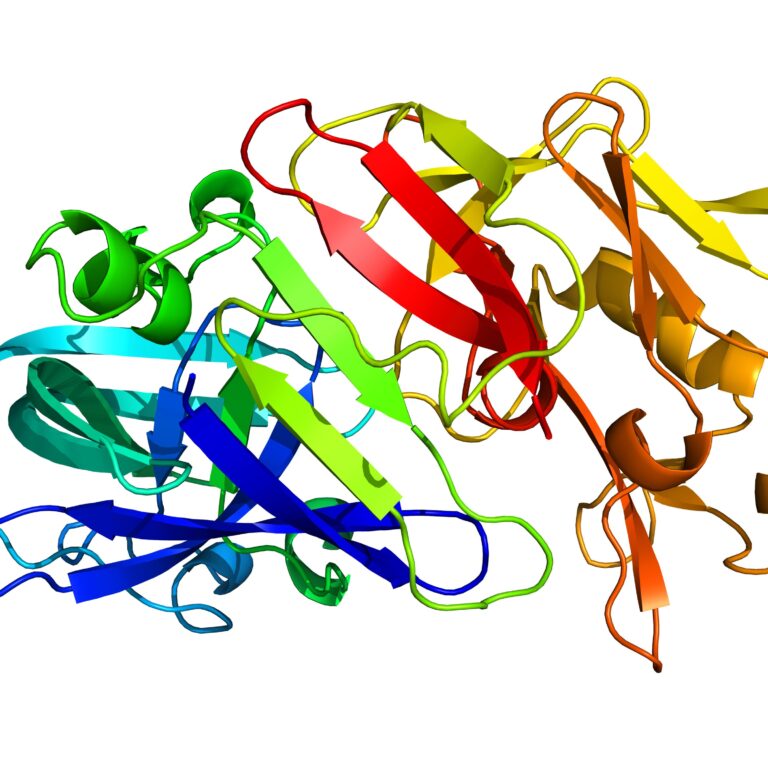
Proteins are molecular machines that must first assemble themselves to function. But how does a protein, which is produced as a linear string of amino acids, assume the complex three-dimensional structure needed to carry out its job?
That’s where Folding at Home comes in. Folding at Home is a sophisticated computer program that simulates the way atoms push and pull on each other, applied to the problem of protein dynamics, aka “folding”. These simulations help researchers understand protein function and to design drugs and antibodies to target them. Folding at Home is currently studying key proteins from the virus that causes COVID-19 to help therapeutic development.
Given the extreme complexity of these simulations, they require an astronomical amount of compute power. Folding at Hold solves this problem with a distributed computing framework: it breaks up the calculations in the smaller pieces that can be run on independent computers. Users of Folding at Home – millions of them today – donate the spare compute power on their PCs to help run these simulations. This aggregate compute power represents the largest super computer in the world: currently 2.4 exaFLOPS!
Folding at Home was launched 20 years ago this summer in the lab of Vijay Pande at Stanford. In this episode, Vijay (now a general partner at a16z) is joined by his former student and current director of Folding at Home, Greg Bowman, an associate professor at Washington University in St. Louis, and Lauren Richardson. We discuss the origins of the Folding at Home project along with its connection to SETI@Home and Napster; also the scientific and technical advances needed to solve the complex protein folding and distributed computing problems; and importantly what does understanding protein dynamics actually achieve?
Leave a Reply
You must be logged in to post a comment.